This article on the T. S. Eliot Prize was first published on the Poetry Book Society website in 2006.
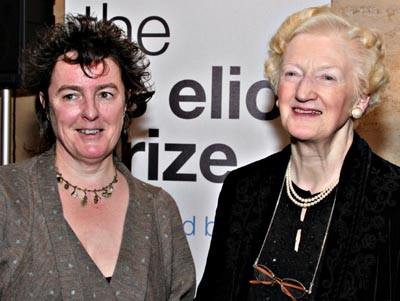
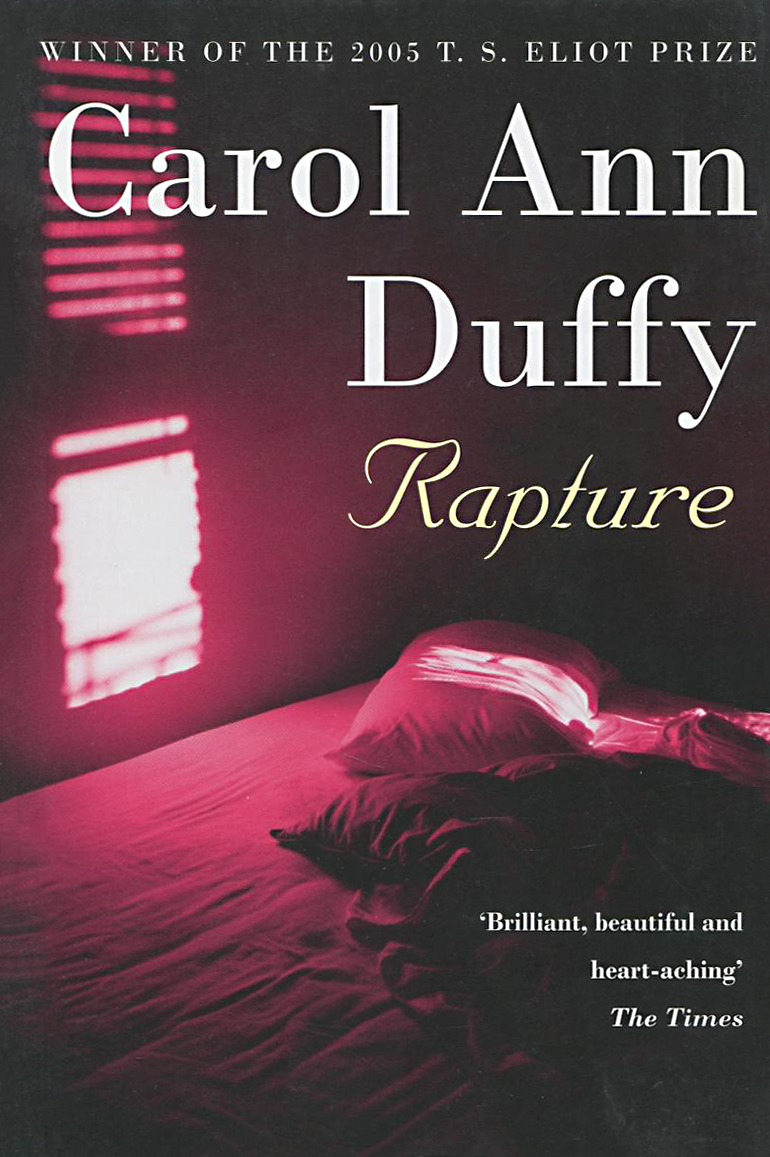
The Poetry Book Society is pleased to announce that the winner of the T. S. Eliot Prize for the best single-author collection of poetry published in 2005 is Carol Ann Duffy, for her collection Rapture.
After several hours of deliberation, the Chair of the 2005 judges, David Constantine, delivered the winner’s name to the Poetry Book Society just after 2pm. He called Rapture ‘a coherent and passionate collection, very various in all its unity of purpose. In the language and circumstances of our day and age, it re-animates and continues a long tradition of the poetry of love and loss.’ Read the Chair’s speech in full here.
Rapture was the Poetry Book Society’s Autumn 2005 Choice. This passionate, highly personal collection of love poems focuses the intensity of a single voice on all matters of the heart, from first encounters, through rows and adultery, to recriminations, parting, and questions of redemption. The poems, often brief, sing with individual life, while the collection as a whole follows a dramatic arc that consumes the reader’s attention.
Rapture is also one of the top 20 selling poetry books in the UK (as reported by The Bookseller for the four-week period ending 10 December 2005); its rank was eighth on a list that contained very few new collections by a single author (as opposed to anthologies and collected works). This fact testifies to the popular acclaim of the poet and her work, and this year’s T. S. Eliot Prize highlights a (some would say) rare moment of agreement between the critics and the booksellers as to what constitutes great poetry.
‘Certainly, these poems are destined to be reprinted many times. You will read them on the tube, spot them on the syllabus, come across them in anthologies.’ (PBS Bulletin, Autumn 2005)
Over
‘That’s the wise thrush; he sings each song twice over,
Lest you should think he never could recapture
The first fine careless rapture!’
– Robert Browning
I wake to a dark hour out of time, go to the window.
No stars in this black sky, no moon to speak of, no name
or number to the hour, no skelf of light. I let in air.
The garden’s sudden scent’s an open grave.
What do I have
to help me, without spell or prayer,
endure this hour, endless, heartless, anonymous,
the death of love? Only the other hours—
the air made famous where you stood,
the grand hotel, flushing with light, which blazed us
on the night,
the hour it took for you
to make a ring of grass and marry me. I say your name
again. It is a key, unlocking all the dark,
so death swings open on its hinge.
I hear a bird begin its song,
piercing the hour, to bring first light this Christmas dawn,
a gift, the blush of memory.
‘Over’ from Rapture, by Carol Ann Duffy, published 2005 by Picador Poetry, reproduced by kind permission.
Carol Ann Duffy was born in 1955 in Glasgow and read philosophy at Liverpool University. She is a former editor of the poetry magazine Ambit and is a regular reviewer and broadcaster. Her numerous poetry collections include Mean Time (1993), which won the Whitbread Poetry Award and the Forward Poetry Prize (Best Collection). Rapture (2005) was the Poetry Book Society Choice for Autumn 2005. Carol Ann Duffy received an Eric Gregory Award in 1984; a Cholmondeley Award in 1992; an OBE in 1995; and a CBE in 2001. She lives in Manchester.
The T. S. Eliot Prize was inaugurated in 1993 to celebrate the Poetry Book Society’s 40th birthday, and honour its founding poet. Now in its thirteenth year, the T. S. Eliot Prize is ‘poetry’s most coveted award’ (Jane Wheatley, The Times). The prize is now firmly established as the U.K.’s most prestigious award for a new collection of poetry. Andrew Motion, the Poet Laureate, has described the award as ‘the Prize most poets want to win’.
Previous winners (in chronological order) are: Ciaran Carson, Paul Muldoon, Mark Doty, Les Murray, Don Paterson, Ted Hughes, Hugo Williams, Michael Longley, Anne Carson, Alice Oswald, Don Paterson and George Szirtes.
This year’s judges are David Constantine (Chair), Kate Clanchy and Jane Draycott.
The Poetry Book Society, founded by T. S. Eliot in 1953, is a unique poetry book club which provides its international membership with up-to-date information about contemporary poetry. The Society offers its members a substantial discount on every poetry title published in the U.K. and the Republic of Ireland, thereby developing poetry and its audience. For full details of a range of books and membership packages visit our website www.poetrybooks.co.uk.
The T. S. Eliot Prize 2005 Shortlist was:
Polly Clark – Take Me with You (Bloodaxe Books)
Carol Ann Duffy – Rapture (Picador Poetry)
Helen Farish – Intimates (Cape Poetry)
David Harsent – Legion (Faber & Faber)
Sinéad Morrissey – The State of the Prisons (Carcanet Press)
Alice Oswald – Woods etc. (Faber & Faber)
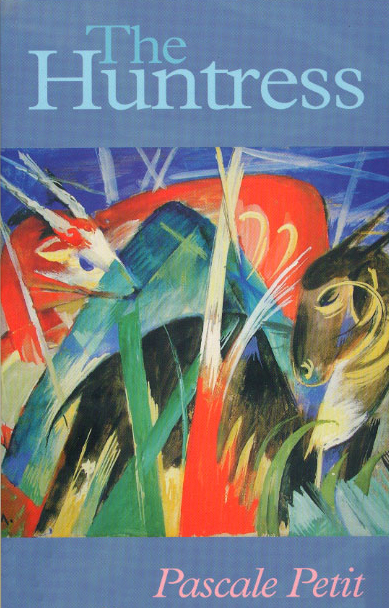
Pascale Petit – The Huntress (Seren)
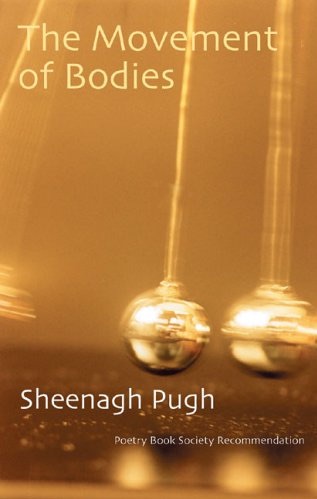
Sheenagh Pugh – The Movement of Bodies (Seren)
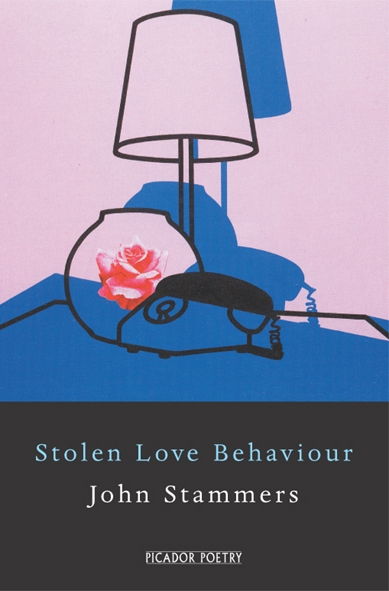
John Stammers – Stolen Love Behaviour (Picador Poetry)
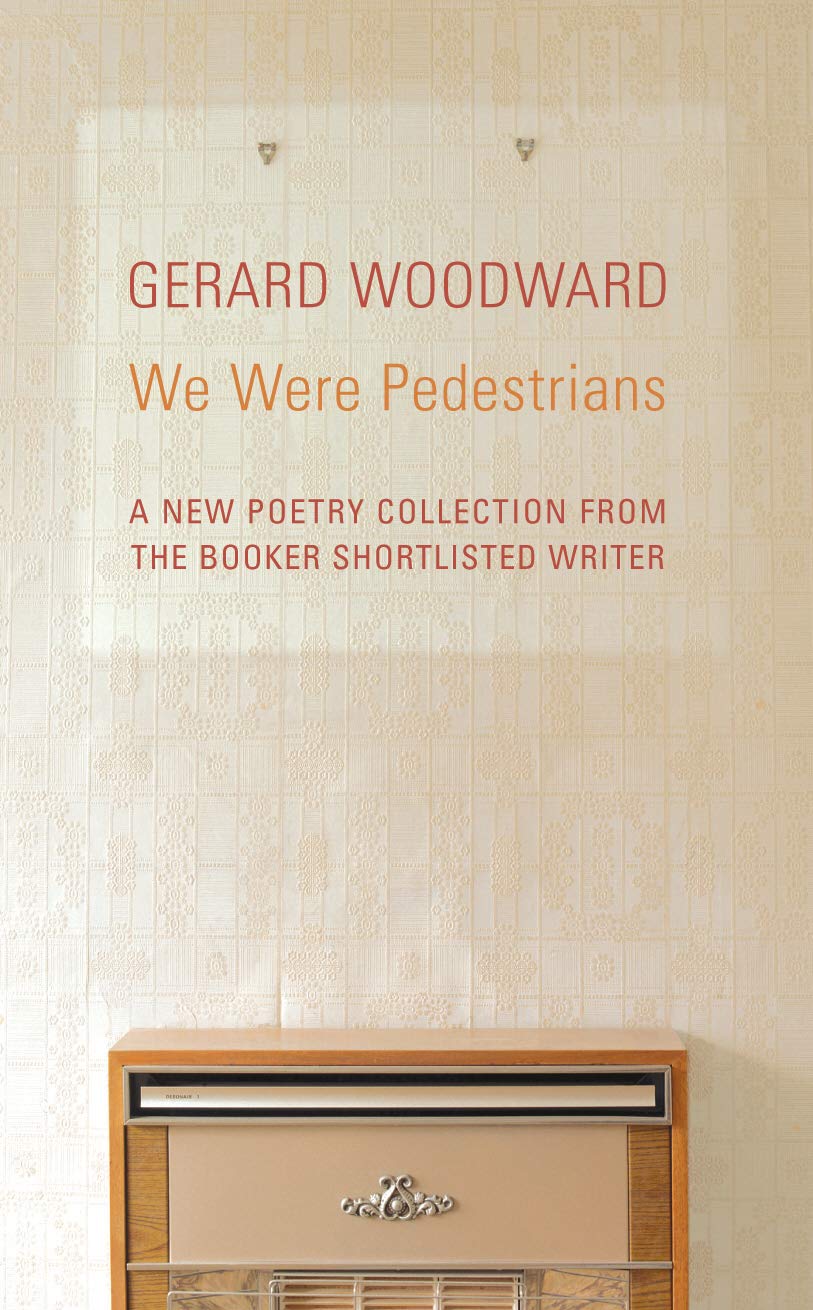
Gerard Woodward – We Were Pedestrians (Chatto & Windus)
The T. S. Eliot Prize is sponsored by the broadcaster Five.
This article has been republished to provide a fuller picture of the T. S. Eliot Prize history. The Poetry Book Society ran the T. S. Eliot Prize until 2016, when the T. S. Eliot Foundation took over the Prize, the estate having supported it since its inception.