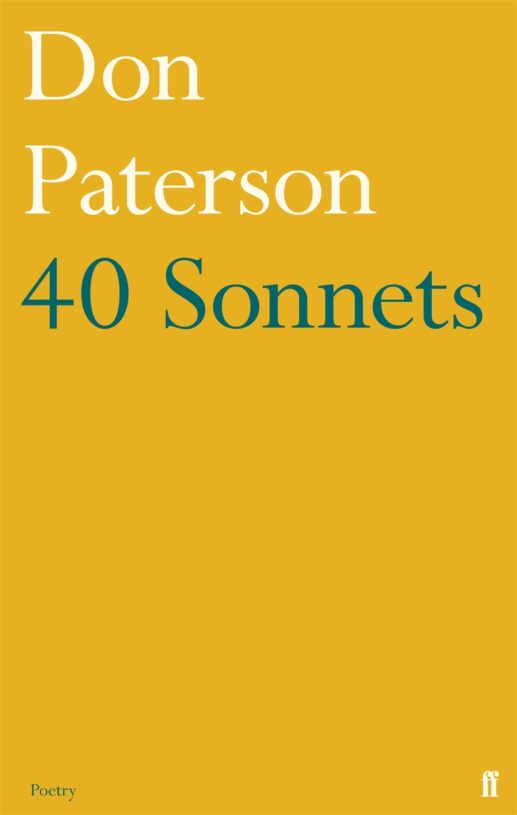
40 Sonnets

Faber & Faber
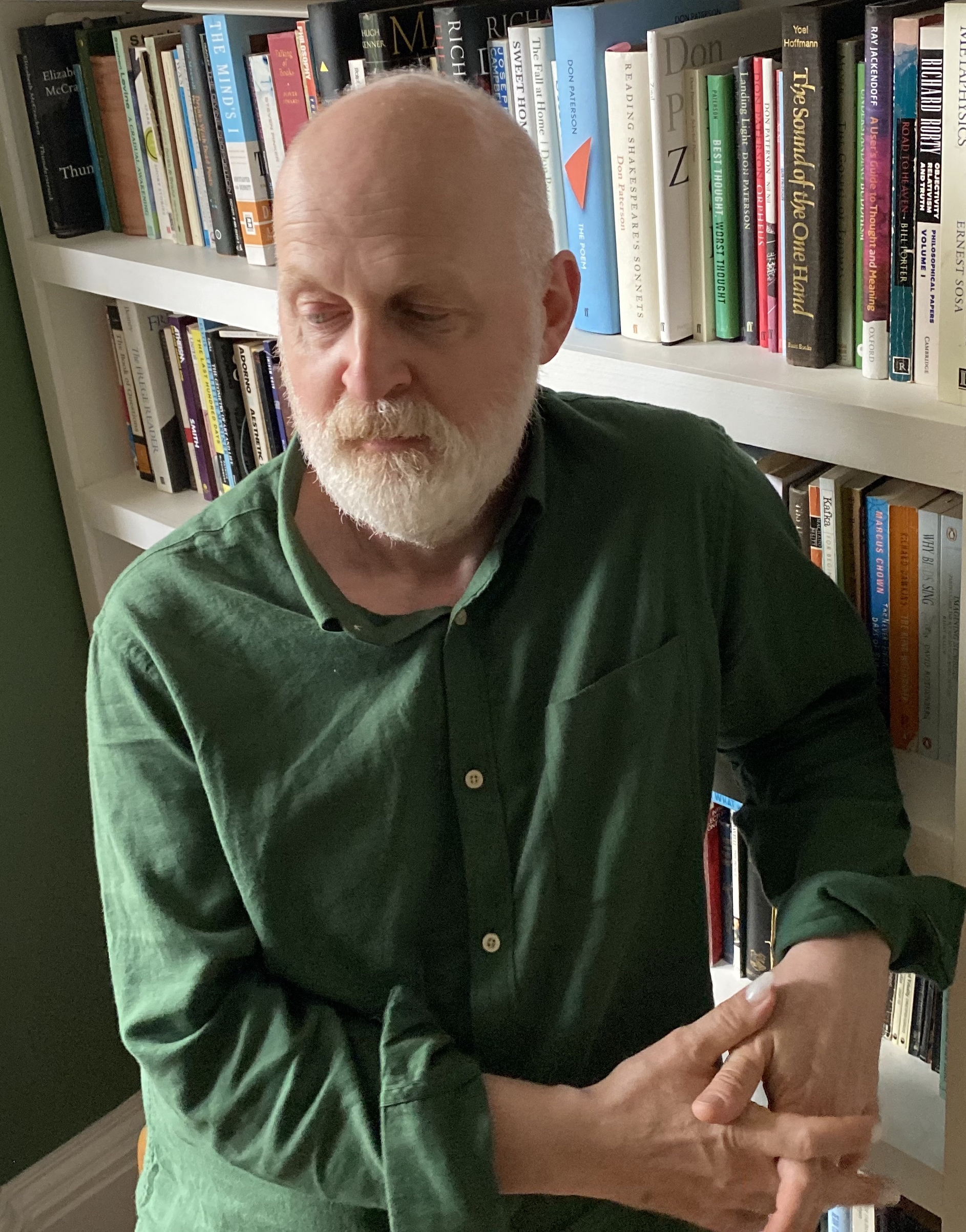
Don Paterson 2022 1200 x 1530
Don Paterson was born in Dundee, Scotland. He is the author of sixteen books of poetry, aphorism, criticism and poetic theory. His poetry has won many awards, including the Whitbread Poetry Prize, the Geoffrey Faber Memorial Prize, the Costa Poetry Award, and three Forward Prizes; he is the only poet to have won the T. S. Eliot Prize on two...

Review

Review

Creative, funny, brutal and liberating, in 40 Sonnets Don Paterson shows mastery of the form, writes John Field

Videos

Don Paterson reads from 40 Sonnets at the T. S. Eliot Prize 2015 Shortlist Readings

Related News Stories

This article on the T. S. Eliot Prize was first published on the Poetry Book Society website in 2016.   The Poetry Book Society is delighted to announce that the winner of the T. S. Eliot Prize 2015 is Sarah Howe for her debut collection Loop of Jade, an intimate...
This article on the T. S. Eliot Prize was first published on the Poetry Book Society website in 2015. The Poetry Book Society is delighted to announce a distinguished international Shortlist for the T. S. Eliot Prize 2015, with one poet from the US, one from Jamaica, one from Australia,...
Review of 40 Sonnets

Creative, funny, brutal and liberating, in 40 Sonnets Don Paterson shows mastery of the form, writes John Field

Viewed collectively, the forty sonnets in Don Paterson’s latest are breathtaking. Paterson presents the reader with a riotous banquet of variations upon the form. Some of these will be familiar to those who’ve read sonnets before but others are jaw-droppingly creative, funny, brutal and liberating excursions for a form usually associated with a strict rulebook.

‘An Incarnation’ presents a transcript of the domestic half of a telemarketing call. Eyeballed on the page, this sonnet is already in smithereens, broken by the wedges of white space inserted to represent the unheard call centre half of the exchange and those all too familiar frustrations are dissected on the page:
Yes          No                    No I can’t ‘confirm my identity’ –
I know   I’m me            Eh?     Hang on you called me

The rhythm, the pleasing compactness of the sonnet is destroyed. You’d be forgiven for thinking that Paterson’s point is that there’s no poetry to modern life and that this is an anti-sonnet, but as Paterson destroys, he also creates – sustaining a rhyme scheme where every line rhymes: he, free, be, agency, identity… It’s an incredible tour de force and is utterly apt for those conversations where you might as well be talking to yourself, where your own expression is debased as you attempt to conform to the limitations of the banking computer you are ‘talking’ to, or to the script you are compelled to play along with. With a wry smile, Paterson uses the material to riff on identity.

The speaker uses some Scottish dialect but, when asked his nationality, replies uncertainly ‘I guess White British?’ Perhaps this Scot does not see himself as white British but is forced to mind-read the option likely to be listed on the form. In the world of tick box online surveys gone mad, who are you if you’re not listed as an option? The poem’s just superb. I’m itching to quote the final couple of lines but I’ll sit on hands. Buy the book and find out why this one’s called ‘An Incarnation’. God, Paterson’s good.

So, we move from the sublime to an altogether different, although equally sublime, sonnet. The epigraph to ‘The Foot’ reads ‘“Mowing the Grass”, Gaza 2014’ referring the reader to Israel’s military crackdown on Hamas. Here, Paterson memorialises the death of an eleven- or twelve-year-old, killed playing football on the beach as it was shelled by the Israelis. Paterson, capable of delivering fourteen A rhymes straight in ‘An Incarnation’, practically refuses to rhyme here at all, with the exception of the word ‘foot’, which he makes rhyme with itself three times with horrifying effect as a young life and a father’s love is reduced to a body part. Andrew Motion’s ‘The Vallon Men’ in his 2012 collection The Customs House rejected the poetic, allowing a serviceman, lost for words, to try to speak for himself and, in the process, Motion says it all. Paterson’s poem begins:

I have no words so here are the no words
for the one who was playing football on the beach
when you shelled it for kicks, and whose father
while the medic ‘frantically works away’
strokes his gawky long-toed sockless foot

Those Elizabethan sonneteers loved playing with the inexpressibility topos (the thing which needs to be said cannot be said). In every other sonnet I’ve read, the inexpressibility topos feels like little more than a staging post on the road to self-aggrandisement, as the poet finally pulls it off, revealing his macho pre-eminence and surfing on our applause and adulation. In Paterson’s hands I have, for the first time, felt the power of the device as his speaker reels in revulsion and disbelief. There are no words and, during the course of the poem, the father is stripped of his language. The poem also relies upon the words of another, perhaps of a journalist, to approach this obscenity, adding to the sense that this act is just too disgusting to approach.

So, ‘An Incarnation’ and ‘The Foot’ are polar opposites. Bear in mind that Paterson has also given us Reading Shakespeare’s Sonnets, an electrifying book that reads like a natter over a few beers with a mate. Paterson knows sonnets and in his Shakespeare book he wrote a book about them. In 40 Sonnets he demonstrates complete mastery of the form – and then some.

Don Paterson’s 40 Sonnets (Faber & Faber) was shortlisted for the T. S. Eliot Prize 2015. John Field blogs at Poor Rude Lines.
40 Sonnets
Faber & Faber

Newsletter

Be among the first to receive updates on the latest T. S. Eliot Prize news by subscribing now!


The T. S. Eliot Prize on Social Media

Part of tseliot.com

Designed by thinking

Interview of 40 Sonnets

40 Sonnets
Faber & Faber

Newsletter

Be among the first to receive updates on the latest T. S. Eliot Prize news by subscribing now!


The T. S. Eliot Prize on Social Media

Part of tseliot.com

Designed by thinking