In 2023 the T. S. Eliot Prize celebrated its 30th anniversary. We marked the occasion by looking back at the collections which have won ‘the Prize poets most want to win’ (Sir Andrew Motion).
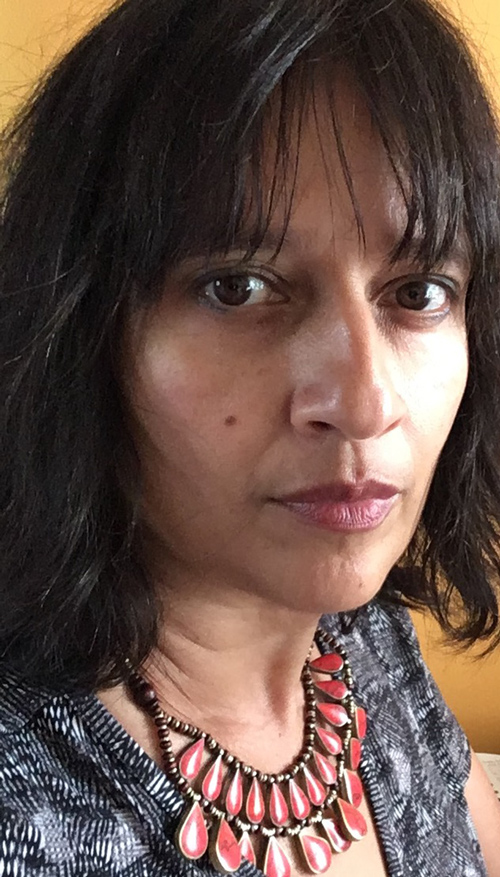
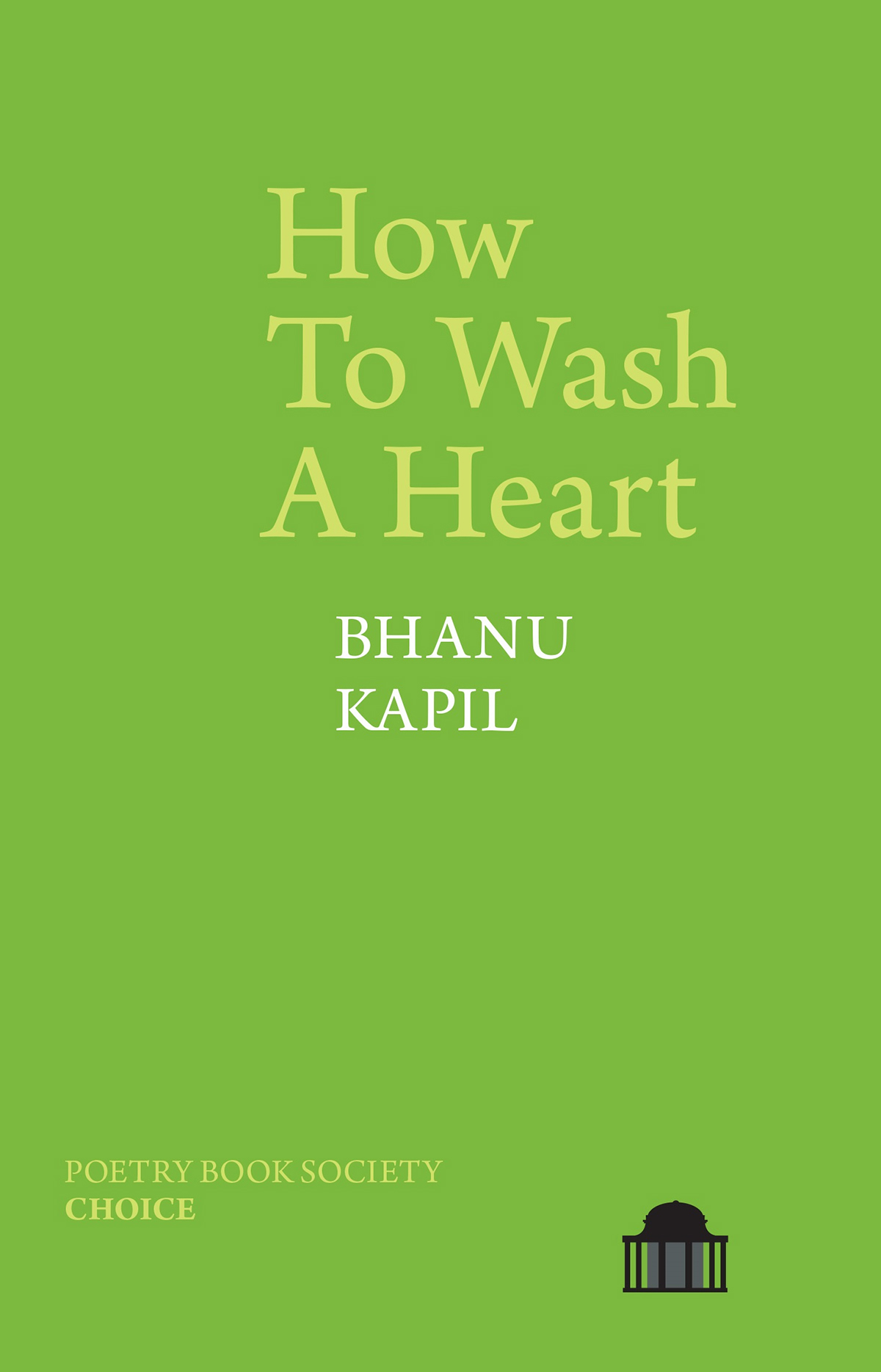
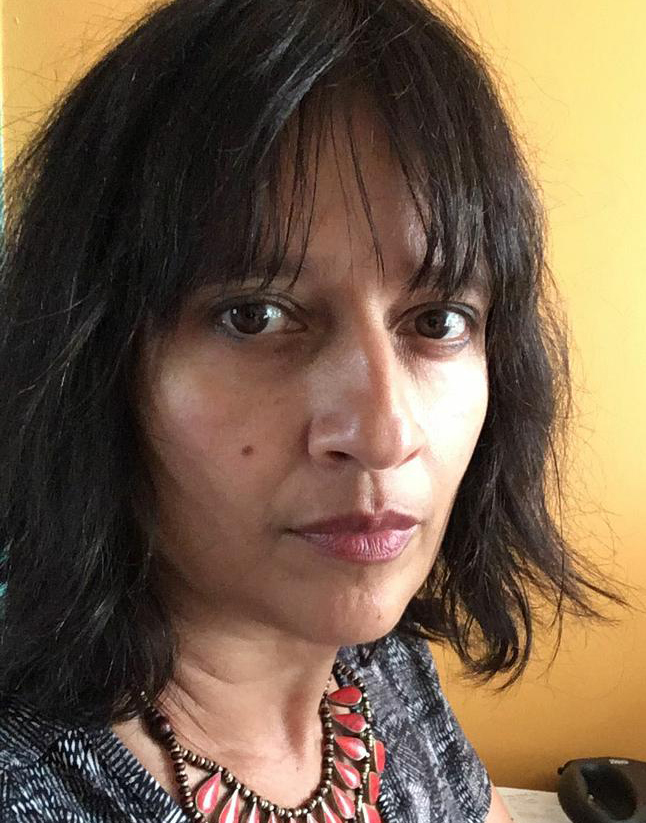
Bhanu Kapil won the T. S. Eliot Prize 2020, judged by Lavinia Greenlaw (Chair), Mona Arshi and Andrew McMillan. ‘Our shortlist celebrated the ways in which poetry is responding to profound change,’ Lavinia Greenlaw said. ‘From this impressive field, we unanimously chose Bhanu Kapil’s How to Wash a Heart as our winner. It is a radical and arresting collection that recalibrates what it’s possible for poetry to achieve.’
We asked Bhanu to reflect on winning the T. S. Eliot Prize. She wrote:
The night I won the T. S. Eliot Prize, I was at home, about to microwave a plate of Indian food, when a friend texted: ‘Congratulations!’ She’d forwarded to the end of the Prize Readings video, something I had not done, precisely because it had not occurred to me to do so. I was so shocked. At that time, it was still the pandemic, and as a carer of an older parent, I was cautious about travel or spending time indoors in groups. Or perhaps the live Readings had been cancelled? And that’s why I was making dinner in my pyjamas, ready to celebrate whoever it was who was about to win? I will never forget the visceral surprise.
The next morning, I made a red ice heart, like the one I’d created for the ICA performance the book was inspired by, and which I describe in the notes that come at the end of the poems. Then, I placed it in the fresh snow outside my door, to melt. That day, I felt a sense of freedom and possibility, recalling the deep wish I’d had, to write something that could bring me back to the UK after so long in the United States. It’s that wish that manifested as a book, in the first place, thanks to Deryn Rees-Jones and Pavilion Poetry. But publishing a book of poetry does not always mean it will be widely read, in the way that one hopes for or imagines. Sometimes a book is like a stone thrown into the water. It sinks to the bottom, and many years pass before it’s picked up, or read again. That, in fact, had been my experience with all my previous books, all published by small presses in the US. But now, this very specific dream, of writing something that might be read in my birthplace, in one sitting, by many people, had come spectacularly true.
The experience led to many gates swinging open. I went through them, these cultural gates, but it took some time to feel the congruence between the writer that I am when I am writing in a notebook, and this other writer, the one who’s won a prize. Winning the Eliot Prize was protection, a shield, and it really helped me to re-establish my life in the UK. The money helped immensely, but it was this radical incongruence, of abruptly being or becoming a writer who’d won a prize, that led to great change. I think it has changed the way I write: towards what, and for whom.
The exhibition Esta Luz, Tóxica (II Movimiento), a collaboration with Giulia Cenci, Georgina Hill and Jonás De Murías, is an example of a curation that the book has flowed into and through, in ways that I don’t think the book could have done without the visibility of the Prize.
Bhanu Kapil is the author of five books of poetry/prose: The Vertical Interrogation of Strangers (Kelsey Street Press, 2001), the newly reissued Incubation: a space for monsters (Leon Works, 2006), humanimal [a project for future children] (Kelsey Street Press, 2009), Schizophrene (Nightboat, 2011), and Ban en Banlieue (Nightboat, 2015). She was the recipient of the Windham-Campbell Prize for Poetry 2020.
ABOUT THE T. S. ELIOT PRIZE
The T. S. Eliot Prize celebrated its 30th anniversary in 2023. Awarded annually to the best new poetry collection published in the UK and Ireland, the Prize was founded by the Poetry Book Society in 1993 to celebrate the PBS’s 40th birthday and to honour its founding poet. The T. S. Eliot Estate has provided the prize money since the Prize’s inception in 1993, and the T. S. Eliot Foundation took over the running of the Prize following the acquisition of the PBS by InPress Books in 2016. For more on the history of the Prize, visit tseliot.com/prize