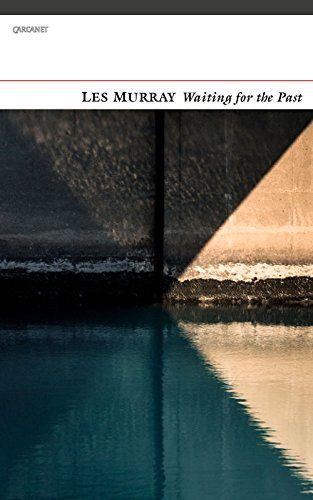
Waiting for the Past

Carcanet Press
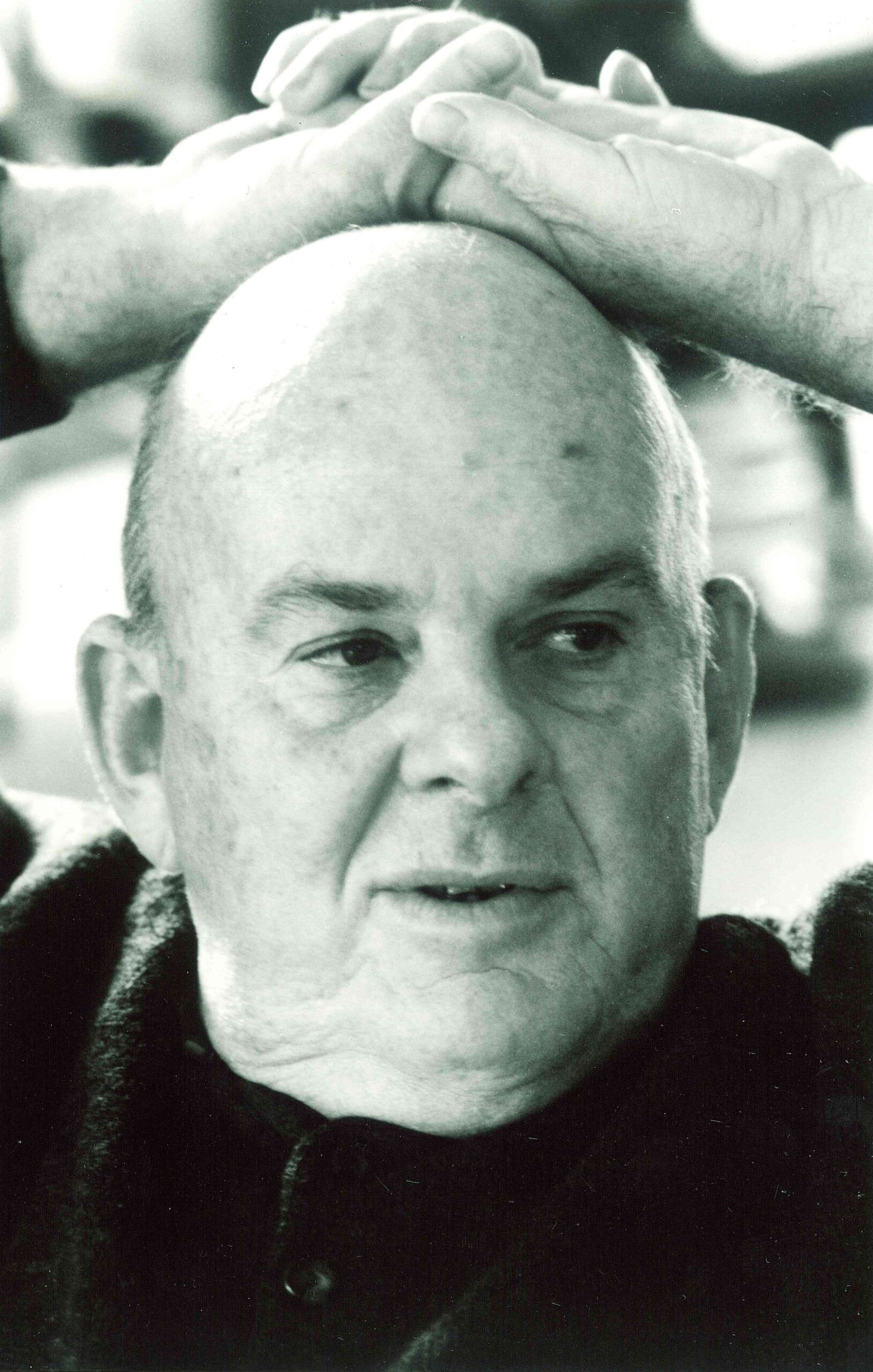
Les Murray 600
Les Murray (1938-2019) grew up on a dairy farm at Bunyah on the north coast of New South Wales. He studied at Sydney University and later worked as a translator at the Australian National University and as an officer in the Prime Minister’s Department. From 1971 he has made literature his full-time career. He was the first Australian poet to...

Review

Review

Honest, wise and dignified, Les Murray’s Waiting for the Past is a meditation on old age and more, writes John Field

Videos

Michael Schmidt reads from Les Murray’s Waiting for the Past at the T. S. Eliot Prize 2015 Shortlist Readings

Related News Stories

This article on the T. S. Eliot Prize was first published on the Poetry Book Society website in 2016.   The Poetry Book Society is delighted to announce that the winner of the T. S. Eliot Prize 2015 is Sarah Howe for her debut collection Loop of Jade, an intimate...
This article on the T. S. Eliot Prize was first published on the Poetry Book Society website in 2015. The Poetry Book Society is delighted to announce a distinguished international Shortlist for the T. S. Eliot Prize 2015, with one poet from the US, one from Jamaica, one from Australia,...
Between 2006 and 2015, the Poetry Book Society ran the T. S. Eliot School Shadowing Scheme (later renamed the Writing Competition) in collaboration with the English and Media Centre, offering GCSE and A Level students the chance to get involved with the judging of the T. S. Eliot Prize. Two...
Review of Waiting for the Past

Honest, wise and dignified, Les Murray’s Waiting for the Past is a meditation on old age and more, writes John Field

To read Les Murray’s Waiting for the Past is to enjoy the playful movement of the intellect as it jumps from subject to subject, turning upon a word, or idea. The collection is, among many other things, a meditation upon old age but, along the way, Murray waves his flag for Australia and, with careful observation, invites us to experience simple acts – like the clipping of toenails – afresh.

One of the earlier poems, ‘The Canonisation’, considers the canonisation of Mary MacKillop, Australia’s only saint, on Murray’s birthday in 2010. Murray asks ‘what are the clergy giving you / on my birthday, Mother Mary?’ With a word, Murray cuts to the heart of it: the origin of ‘clergy’ lies in clerkship so, of all the words Murray could have used to describe Roman Catholicism’s employees, ‘pastors’, ‘fathers’, ‘priests’, he has gone for the one that heavily implies a bureaucracy. In the second stanza, he pushes harder: ‘Sainthood? So long after God did? / Independence? But you’re your own Scot. / The job of Australian icon? // Well yes.’ Murray’s list of rhetorical questions says it all but the final question is answered. Here, as elsewhere, Australia’s landscape, culture and language are championed.

The final stanza of ‘The Canonisation’ turns on the word ‘rise’. With yet another rhetorical question, ‘Who says a woman can’t rise / in the Church?’, Murray obliquely points to the emptiness of spiritual titles and hierarchy. As the reader turns the page, and reads ‘High Rise’, that word, ‘rise’, takes Murray’s thoughts somewhere new, and we’re considering overpopulation and the planet’s precarious future. The poem’s imagery implies that we’re trapped as, in Beijing, there are ‘burglar bars to the tenth / level in each new city.’ Although the bars are there for the citizens’ safety, as far as day-to-day life is concerned, they’re imprisoning, as are the ‘white-belted cylinders of dwelling // around every Hong Kong bay’, with belts adding to the poem’s sense of constriction.

Yet, on the facing page, Murray offers us ‘Nuclear Family Bees’. The poem, like its partner, comprises five tercets and a final one line stanza, so they’re visual equivalents. And, yes, the bees do live in ‘a vertical black suburb’, inviting us perhaps to see the Malthusian parallels between dense suburban living and nature, and these bees also inhabit a world of ‘cells’, a Bee-jing. However, as ‘High Rise’ concludes with a stark reminder of China’s (now defunct) one-child policy, the bees burgeon with life and sweetness.

‘The Privacy of Typewriters’ also touches upon the urgent news of the day, opening, as one might expect, with Murray declaring himself a ‘troglodyte’. Of course, these labels are relative and, were he truly a cave dweller, then he would be making his marks on the walls of his home, and not using a typewriter, also a revolutionary technology in its own time. Tradition, the old-fashioned, right way of doing things is gently mocked. However, the poem does point to the erasure of history we now face, as Murray humorously points out that there will be no ‘sheets to sell to the National Library’. Whereas, in ‘1960 Brought the Electric’, the ‘Old lampblack corners / and kero-drugged spiders / turn vivid and momentary / in the new yellow glare / that has reached us at last’. Read together, perhaps the poems put our fear of change into perspective so that it is seen, more fittingly, as an aspect of old age. However, even here, there’s ambivalence, as the electric light’s ‘glare’ is harsh, cold and unlike the stove’s nostalgic warm glow.

As ‘The Canonisation’ is one of the collection’s first poems, so ‘The Care’ is one of its last. In its title, Murray strips words like ‘carers’, or ‘care workers’, back to their essence, inviting us to really see the core activity at the heart of this job: to care. He presents carers as modern day saints: showering old women while preserving their dignity, and alleviating the embarrassment of the bad-smelling jobs by chatting as they soak them. The final stanza uses the language of Catholicism, presenting a litany of modern saints: ‘so glory to Nurse Cavell, to Nurse Kenny, / Doctor Flynn’. There’s poignancy here as Murray wonders, as we all do, about when it will our turn for the ‘white cotton’.

This collection reminds me how much I dislike the pejorative connotations of ‘old age’. Many cultures still esteem and revere their elders. Returning again to Mary MacKillop, I am reminded that, in Roman Catholic terms, ‘venerable’ is a title awarded to those on the road to sainthood and, thinking of these saintly connotations, I think that this word hits the mark that ‘old’ misses. Murray is a venerable poet and this collection is honest, wise and dignified.

Les Murray’s Waiting for the Past (Carcanet Press) was shortlisted for the T. S. Eliot Prize 2015. John Field blogs at Poor Rude Lines.

Waiting for the Past
Carcanet Press

Newsletter

Be among the first to receive updates on the latest T. S. Eliot Prize news by subscribing now!


The T. S. Eliot Prize on Social Media

Part of tseliot.com

Designed by thinking

Interview of Waiting for the Past

Waiting for the Past
Carcanet Press

Newsletter

Be among the first to receive updates on the latest T. S. Eliot Prize news by subscribing now!


The T. S. Eliot Prize on Social Media

Part of tseliot.com

Designed by thinking