The World Before Snow

Carcanet Press
Liardet, Tim v2
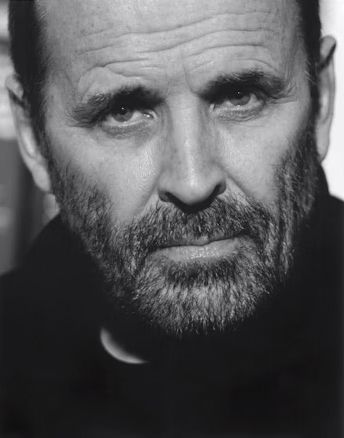
Twice shortlisted for the T.S. Eliot Prize for The World Before Snow (Carcanet) in 2015 and The Blood Choir (Seren) in 2006, Tim Liardet has produced eleven collections of poetry to date. He has also been longlisted for the Whitbread Poetry Prize, received several Poetry Book Society Recommendations, a Poetry Book Society Pamphlet Choice, an Arts Council England Writer Award,...

Review

Review

Through blizzards, paintings and astrophysics Tim Liardet’s The World Before Snow challenges and rewards the reader, writes John Field

Videos

Tim Liardet reads from The World Before Snow at the T. S. Eliot Prize 2015 Shortlist Readings

Related News Stories

This article on the T. S. Eliot Prize was first published on the Poetry Book Society website in 2016.   The Poetry Book Society is delighted to announce that the winner of the T. S. Eliot Prize 2015 is Sarah Howe for her debut collection Loop of Jade, an intimate...
This article on the T. S. Eliot Prize was first published on the Poetry Book Society website in 2015. The Poetry Book Society is delighted to announce a distinguished international Shortlist for the T. S. Eliot Prize 2015, with one poet from the US, one from Jamaica, one from Australia,...

Review of The World Before Snow

Through blizzards, paintings and astrophysics Tim Liardet’s The World Before Snow challenges and rewards the reader, writes John Field

Early morning’s untrodden snow is inviting because you are called, in your own small way, to be an intrepid explorer – to chart the uncharted. Reading contemporary poetry offers this excitement; you can hear your soles crunching the first footsteps into the landscape. Tim Liardet’s The World Before Snow poses questions and sets challenges. Its point of embarkation is a love affair in blizzard-bound Boston and, as the reader, you will reach the end of this collection warmed by your exertions.

Liardet opens each of the collection’s four sequences with a touchstone entitled ‘Ommerike’. Some online commentators see America’s roots in ‘omme-rike’, Norse for ‘remotest land’. However, the Oxford English Dictionary begs to differ, seeing the continent as named after the Florentine explorer, Amerigo Vespucci. Either way, language feels unstable and contested – as does the Internet when asked to adjudicate on this matter:
We’re told how a flight of grackles and cowbirds
dropped out of the sky in Baton Rouge, thudded
everywhere on the ground, blossomed into gardenias

Sure enough, in 2011, Louisiana’s birds mysteriously dropped from the sky – an ominous portent – but ‘grackles’ also has an Old World meaning (starlings) and a parallel New World meaning (genera Scolecophagus and Quiscalus), lending language a doubleness and uncertainty. Nothing we embark upon is ever new and, despite that fact that ‘anything could happen’, ‘this could be something we have done before’. Through Ovid, the blossoming takes us back to the Old World, back to something we have read before, and nothing new is ever new.

Each sequence comprises a set of self-portraits. The first of these, ‘Self-Portrait with Mysterious Figure as Coup de Foudre’, may evoke Rembrandt’s An Old Man in Military Costume. For hundreds of years, the painting appeared to contain just the old man but X-ray technology reveals the underlying painting of the young man, perhaps of Rembrandt himself:
Sanctus. I could not tell exactly who or what you were,
were not. I thought you might have been the I, I, I, of the seabird.

As ‘Ommerike’ closes with a ciborium, the holiest vessel for the holiest of contents, this poem opens with ‘Sanctus’, ‘Holy’, the conclusion of the consecration, endowing love with a transformative quality – as the alchemy of the consecration turns bread into the body of Christ, so base materials are elevated. Identity is fluid, the first person may or may not be the call of the seabird and skeins of the poem’s cinematic smoky imagery are ‘fretful above the cloud-flown derricks’ and ‘everything was reaching everything’.

‘Self-Portrait with Drag-Field and Dark’ invites us, I think, to see time as relative, subject to distortion by huge rotating objects like black holes. Attraction is simply the effect of one body upon another and Liardet scales this up to a cosmic level:
you belonged to someone else and so did I.
We were caught, it seemed in the star’s drag-field
which meant the room very slowly started to rotate.

John Donne’s ‘The Sun Rising’ playfully imagines the bed as the centre of the universe, as he attempts to dismiss the morning sun, asking it to go and shine somewhere else. Liardet’s is a post-Einsteinian take on this theme, where bodies and attraction are subject to the laws of physics and where, in the heat of passion, even time can stop.

Ghosts pervade the collection. They lurk beneath Rembrandt’s surface paint and, in the sonnet ‘Grunt’, they haunt the gym, where insecurity and jealousy modulate physical space:
                              The ghost goes through its work-out.
For its every long pull on the oar—from shin bone to waist—
You have to pull five or more to keep up with the pace.

The poem is a brilliant insight into gym culture, envisioning the space as gothic, haunted by bigger men as evidenced by ‘the rowing machine’s baggy loop’. Liardet’s final couplet keeps the ghost in line 13 and ‘You’ in line 14 – intimately connected (by rhyme) but running on otherwise parallel lines.

Liardet treats his reader with respect. He will ask you to work hard but The World Before Snow yields some memorable poetry.

Tim Liardet’s The World Before Snow (Carcanet Press) was shortlisted for the T. S. Eliot Prize 2015. John Field blogs at Poor Rude Lines.

The World Before Snow
Carcanet Press

Newsletter

Be among the first to receive updates on the latest T. S. Eliot Prize news by subscribing now!


The T. S. Eliot Prize on Social Media

Part of tseliot.com

Designed by thinking

Interview of The World Before Snow

The World Before Snow
Carcanet Press

Newsletter

Be among the first to receive updates on the latest T. S. Eliot Prize news by subscribing now!


The T. S. Eliot Prize on Social Media

Part of tseliot.com

Designed by thinking