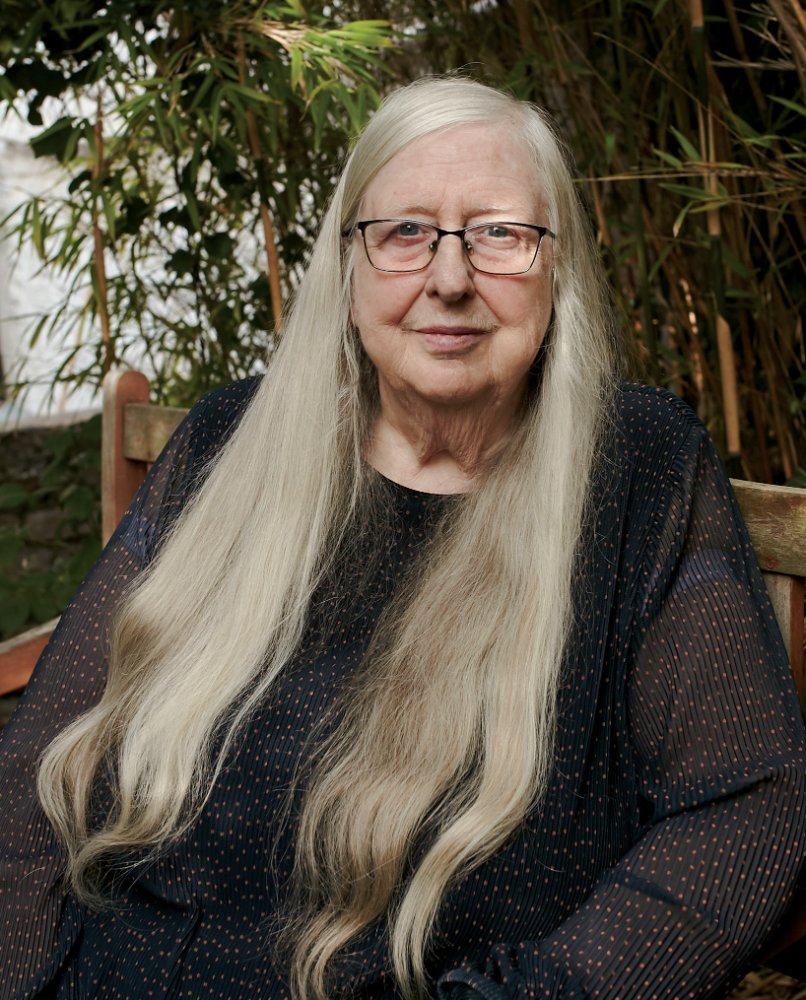
Eiléan Ní Chuilleanáin’s The Map of the World contains poems of community and connection, and through these networks new maps can be drawn, writes John Field
Be among the first to receive updates on the latest T. S. Eliot Prize news by subscribing now!
Eiléan Ní Chuilleanáin’s The Map of the World contains poems of community and connection, and through these networks new maps can be drawn, writes John Field
Although three of the poems in the latest collection by Eiléan Ní Chuilleanáin are in Gaelic and others have an Irish frame of reference, the title — The Map of the World — points to a global outlook. Ní Chuilleanáin’s poems rove across history, literature, migration, faith and philosophy. They come from a time and a place, but Ní Chuilleanáin’s gentle, non-judgemental voice gives her work room to breathe and this, in turn, gives it extra heft. This is a beautiful collection, suffused with humanity and generosity.
Ní Chuilleanáin’s opening poem, ‘The Miracles’, was commissioned for the Strokestown International Poetry Festival, 2021. Strokestown houses Ireland’s National Famine Museum and, yes, the poem speaks to this. But the indefinite article in the first line, ‘Coming out of a country’ (which – any country?), invites us to see a bigger picture ‘where emptied houses / lay open to the weather, sheep in the entry, / weedy graveyards’. ‘[G]raveyards’ is an ominous plural and invites us to imagine improvised burials. This is a universal trauma and dramatises the plight of history’s refugees. Ní Chuilleanáin’s speaker functions as a witness, all too aware of the incredibility of her observations as she persuades the reader to accept them: ‘I could not have made it up: / how, in the tall church beside the wide calm river, / a short walk from the city walls, the poor / whose luck once seemed to have definitely run out / had made, from wooden spars and their own old clothes, / the image of deliverance’. ‘[C]ity walls’ carries the focus beyond any specific locality and history, and ‘spars’ is rich in signification: a pole, a crossbar and, to my mind when reading it, a nautical term for masts, yards, booms and gaffs. In 2023, it conjures Mediterranean migrants washed-up amongst the flotsam on the shores of Lesbos.
In ‘St Brigid’s Well’ we’re at the crossroads of pagan and Christian Ireland, and are reminded that, in an age in which maps are ubiquitous, a place’s significance to a community is not necessarily mappable. We read that ‘When I asked the way to the well people knew what I meant, / and at last I found the place.’ Ní Chuilleanáin’s poems are poems of community and connection, and through these networks new maps can be drawn. Wells and culverted streams direct an ‘excess of water’. As the poem concludes, we see that people have an excess of stories. Like the sacred wells, they possess a healing power. Each story demands respect and, as Ní Chuilleanáin’s speaker points out when telling one woman’s story, ‘I wrote her words down that same evening, to be sure / I had the truth.’ There are thousands of holy wells scattered across the British Isles and perhaps we’re reassured by them. They show us that everything changes: the ‘rosary beads’ show the pagan ceding to the Christian but, at the same time, they remind us that nothing changes: the well remains embedded within its community: ‘people passed with their shopping, heading home’.
The collection maintains a glorious ambivalence towards change. ‘In Ostia, August 2020’ we revisit the world immediately after the first COVID-19 lockdowns: ‘My first night in Italy since the whole world changed— / and what has changed?’ The question bounces back on the seemingly incontrovertible impact of COVID-19, reframing it within a broader, perhaps cosmological context: ‘As before, / a cat appears exactly as the sun goes down’. We can take comfort from being reminded that surprisingly little has changed, and the planet dances to its own rhythms. However, the poem’s final image of a robotic pool cleaner might be read as a comment on our dumb, blind inability to learn from experience as it ‘bangs its nose off the tiles, recoils and begins again’.
It’s worth mentioning the Gaelic poems. ‘Loquitur Caliban’ (‘Caliban Speaks’), is a verse translation of The Tempest, Act 3, Scene 2: ‘Ná bíodh faitíos oraibh. Tá an t-oileán plódaithe / le fuaimeanna’ (‘Be not afeard; the isle is full of noises’). Familiarity with the source text unlocks the translation and speaks against cultural hegemony. It’s never felt more important to assert people’s right to speak Ukrainian, not Russian; Uyghur, not Mandarin; Gaelic, not English. Yet, at no point does The Map of the World ever feel hectoring. A later poem, ‘What Happened Next?’ starts in medias res, with a trademark conversational, intimate tone: ‘So, will we ever be told what happened afterwards / to the man who had fallen among thieves / as he went down from Jerusalem to Jericho’. The stories we choose to tell, the stories we choose to hear, usually focus on misfortune… but the light ‘also falls when there’s nobody there to see it’.
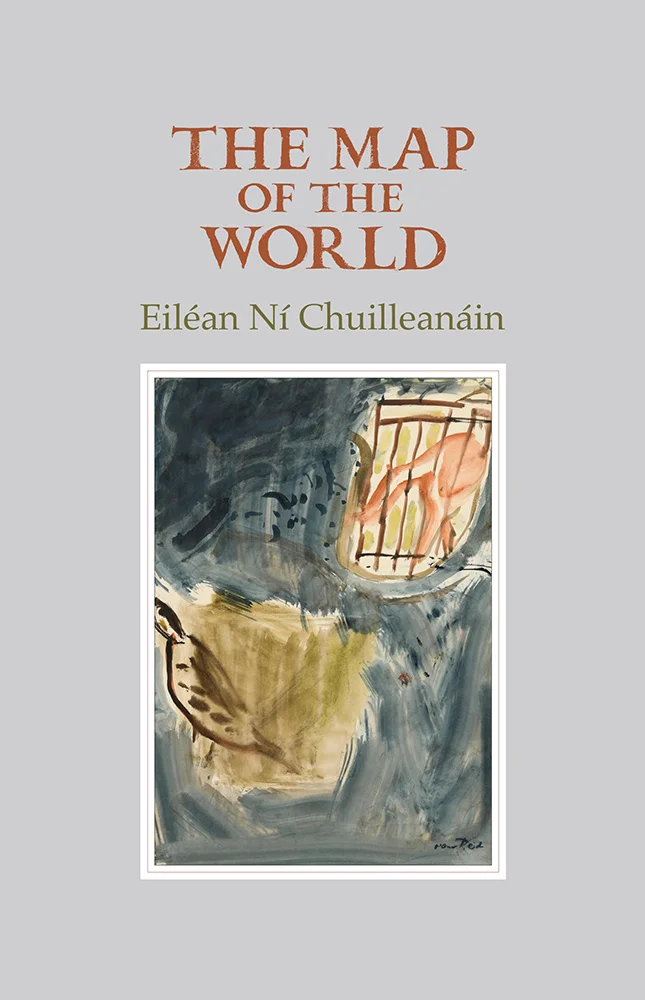
Eiléan Ní Chuilleanáin’s The Map of the World (Gallery Press, 2023) is shortlisted for the T. S. Eliot Prize 2023. John Field blogs at Poor Rude Lines.
Be among the first to receive updates on the latest T. S. Eliot Prize news by subscribing now!