
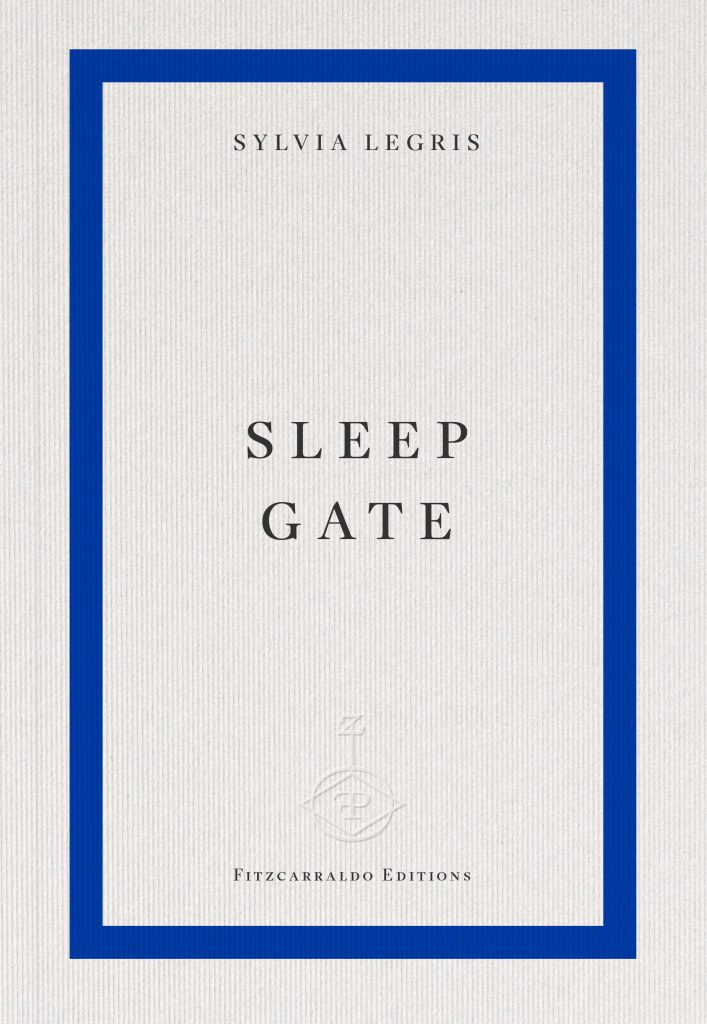

Sylvia Legris’s Sleep Gate suggests that if we read the world with a suitable level of precision its beauty and value will be inescapable, writes John Field
Be among the first to receive updates on the latest T. S. Eliot Prize news by subscribing now!
Sylvia Legris’s Sleep Gate suggests that if we read the world with a suitable level of precision its beauty and value will be inescapable, writes John Field
Sometimes a book invites the reader to set aside their everyday ways of seeing, of reading, of thinking. Sleep Gate, Sylvia Legris’s eighth collection of poetry, is a welcome opportunity to experience the beauty of the planet, and perhaps to encounter many of the scientific terminologies peculiar to botany for the first time. Have a dictionary at hand but, as you read, so you will tune in. For example, early in the collection, we encounter the ‘subnivean’ world – the world ‘existing, living and carried out underneath snow’ (OED). French lessons flood back: il neige, it is snowing. Later, encountering ‘supernivean switchgrass,’ we find that we’re on the right wavelength.
When we think of sleep, perhaps we think of it in human terms. Harvard Medical School’s Division of Sleep Medicine highlights the elevated risks associated with a lack of sleep: obesity, diabetes, cardiovascular disease and early mortality. There’s a wellness industry out there inviting us to think in terms of healthspan rather than lifespan but Sleep Gate ups the ante by requiring us to consider the planet as a whole.
One of five poems entitled ‘In the Wake of’ presents ‘The ongoing momentum / of the 24-hour sleep clock.’ When we think of the 24-hour clock, we’re thinking of the high-stakes precision of armies, aviation and emergencies: it’s the time-telling of alertness, of wakefulness. Legris’s notion of the sleep clock appears to run counter to this. Instead, we are informed that:
The dream under the dream
is the dream of plants,
the somnus plantarum,
a hush-dream doled out
in drams of wind change
The somnus plantarum references Carl Linnaeus’s 1755 work of the same name. In it, Linnaeus explores nyctinasty, the nocturnal movements of the leaves of flowers and plants. He develops the idea to the point that he proposes the possibility of a plant clock. Legris invites us to see the planet afresh, buoyed aloft on the diurnal dreams and rhythms of plants and animals. The glorious scientific precision with which this project is articulated might feel at one remove from ecocriticism but, by asking the reader to see the planet from this point of reference, the centrality of humanity is challenged implicitly. There’s no need to romanticise or to anthropomorphise: if we read the world with a suitable level of precision, its beauty and value will be inescapable.
It’s a painterly collection too and profoundly preoccupied by matters of colour. In the long title sequence, the aforementioned ‘supernivean switchgrass’ is sketched in as ‘iron oxide with buff’ and as ‘A watercolour loneliness’. Even colour here is seen with a scientific, chemical precision before ‘watercolour loneliness’ adds colour’s absence: the papery snowscape upon which the grasses are picked out by nature’s brush. A little further in the same poem, the onset of sleep is compared with floating vegetable matter as ‘an ash bark-dark green, / topmost yew leaves, / duck green, / head of mallard.’ The combined, localised effects of ‘ash bark-dark’ (assonance, the plosive ‘b,’ the guttural ‘k,’ and the internal rhyme) are entirely characteristic of the collection. These jewel-like moments abound, recalling the poetry of Gerard Manley Hopkins. (Think of ‘The Windhover’, his celebration of the kestrel as ‘daylight’s dauphin’ – we’re in the same ballpark here.)
The distinction between planet and human, between within and without, becomes moot. In ‘An Unzipping’ (part of the ‘Sleep Gate’ sequence), time is measured by:
A short circadian lark clock.
A river restless with beta waves.
The erratic-breathing biophony.
The lark’s beta waves, ranging from 12–30 Hz, are analogous to the human beta rhythm: the planet marches to the beat of the same drum and nature functions as a complete organism, its ‘biophony’ commenting on its collective ability for music-making. In the latter part of the same poem, we zoom into the lark where we are shown the ‘sleeping brain’s changing climate.’ No matter the power of the magnification under which we view the planet, another planet is revealed. Over the page, we’re shown another river, the ‘river in the ear incus’.
To read Sleep Gate is to marvel at a mountain range through the aeroplane window, to peer at a snowflake, to squint through the eyepiece at a microscope slide and, as we read, we feel the pulses animating the planet’s deepest urges. We hear its music.
Sylvia Legris’s Sleep Gate (Fitzcarraldo Editions) is shortlisted for the T. S. Eliot Prize 2026. John Field blogs at Poor Rude Lines.
Be among the first to receive updates on the latest T. S. Eliot Prize news by subscribing now!