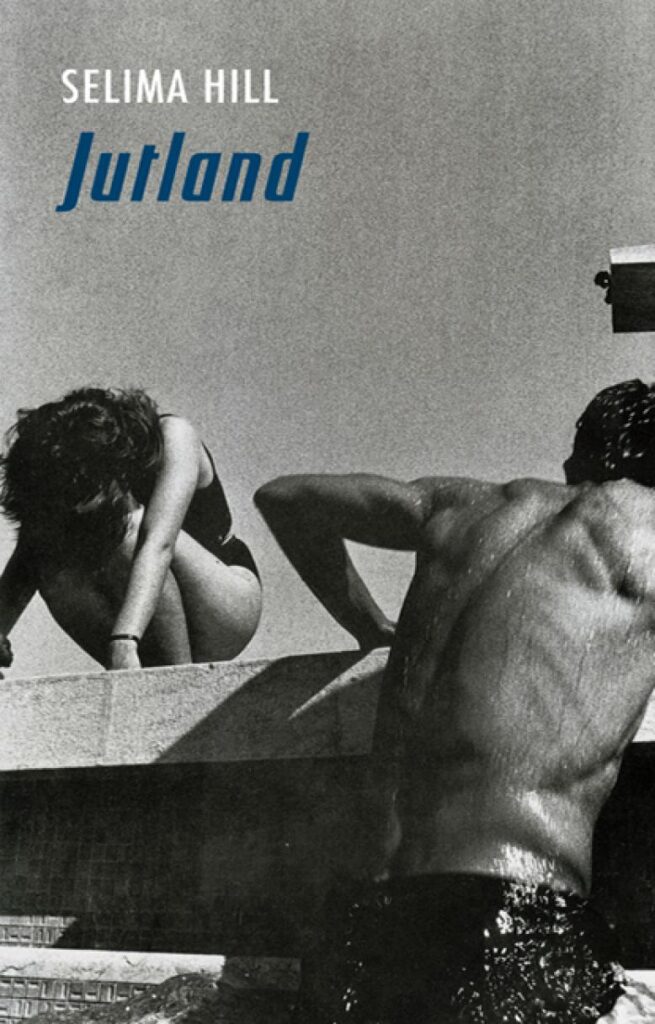
Jutland

Bloodaxe Books
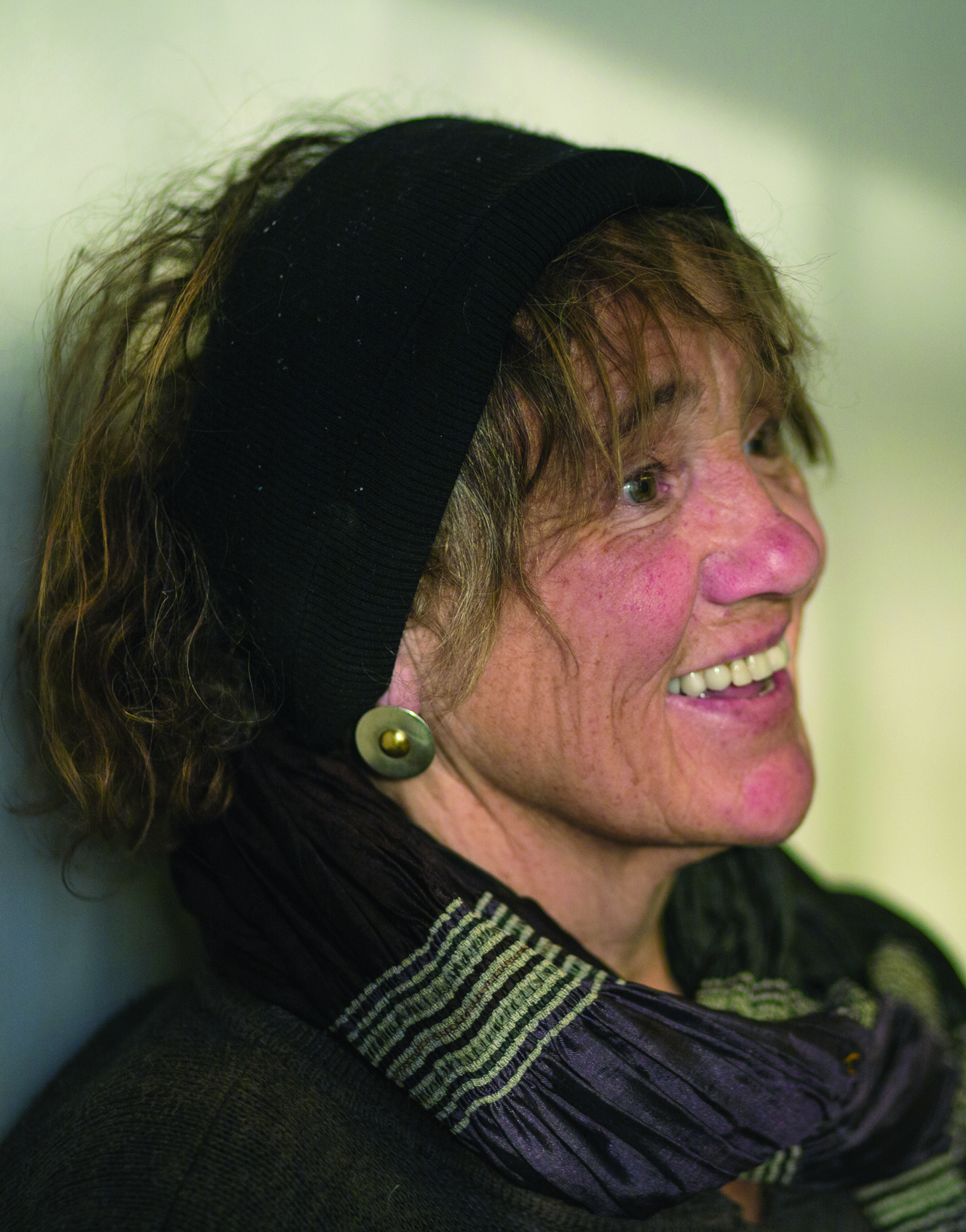
Selima Hill 15-2-2016 by Jill Furmanovsky
Born in Hampstead in 1945 into a family of painters, Selima Hill now lives on the Dorset coast. A prodigiously prolific poet, her first collection, Saying Hello at the Station, was published in 1984 and she has since produced over twenty collections (including two Selected Poems), most published by Bloodaxe Books. Her 1997 collection, Violet, was shortlisted for the Forward Poetry Prize,...

Review

Review

In Jutland Selima Hill uses a restricted palette to wring profoundly disturbing truths from the heart of human relationships, writes John Field

Videos

Karen McCarthy Woolf reads from Selima Hill’s Jutland at the T. S. Eliot Prize 2015 Shortlist Readings

Related News Stories

This article on the T. S. Eliot Prize was first published on the Poetry Book Society website in 2016.   The Poetry Book Society is delighted to announce that the winner of the T. S. Eliot Prize 2015 is Sarah Howe for her debut collection Loop of Jade, an intimate...
This article on the T. S. Eliot Prize was first published on the Poetry Book Society website in 2015. The Poetry Book Society is delighted to announce a distinguished international Shortlist for the T. S. Eliot Prize 2015, with one poet from the US, one from Jamaica, one from Australia,...
Review of Jutland

In Jutland Selima Hill uses a restricted palette to wring profoundly disturbing truths from the heart of human relationships, writes John Field

Selima Hill’s Jutland offers the reader two extended sequences of poems: the twenty-six poems of the first sequence, ‘Advice on Wearing Animal Prints’, are structured as an ABC, a form that usually conjures the nursery and its simple, illustrated elaborations upon common nouns. The second sequence, ‘Sunday Afternoons at the Gravel-pits’, returns obsessively to a father figure in a relentless torrent of unstable, elemental verse.

In both sequences Hill’s undetermined signifiers create a sense of unease and dark ambiguity. For example, the speaker in ‘A’, the first poem in the ‘Advice on Wearing Animal Prints’ sequence, opens with ‘It’s lying on the floor’. Can we take this at face value? The impersonal pronoun ‘it’ suggests that we might be dealing with a pet but, if the ‘it’ in question is human, why hasn’t the speaker determined its sex? Is the problem that its sex cannot be determined easily? We’re barely past the opening word and we’ve dropped through language’s trapdoor and into a domestic chamber of horrors. Hill simply allows the questions to multiply. The poem comprises a single quatrain of blank verse, perhaps lending the speaker some authority. Line three’s eleven syllables are a jolt to the iambic beat, as the speaker tells us that ‘It likes to simply lie there doing nothing’ and it is the phrase ‘doing nothing’ which breaks the rules, perhaps echoing the transgressive indolence and smell of the poem’s subject. As we readjust to its trochaic meter, the line stumbles over this phrase, highlighting its importance. To me, there’s tone, there’s judgement here – and why, if this is a person, does it remain on the floor? And why do the ‘visitors complain it smells of stew’ and not that it is lying on the floor? One of the sequence’s epigraphs is taken from the Slovenian philosopher Slavoj Žižek’s The Sublime Object of Ideology, where he views the self as an emptiness of being and, in their cruelty, these poems explore this.

‘Sunday Afternoons at the Gravel-pits’ opens with a traditional nursery rhyme: ‘Mother may I go and bathe? / Yes, my darling daughter. / Hang your clothes on yonder tree / But don’t go near the water.’ The nursery rhyme presents the absurd absolute power wielded by parents, a power which would see a child naked and denied as it gives with one hand but takes with the other. These poems, usually no more than two or three couplets, are oppressed by the stark, empty white space around them. This whiteness chimes with the poems’ elemental, extreme wintery imagery. The first poem, ‘Golfer in the Snow’ is representative: ‘My father, when he sees his new-born daughter, / stiffens like a golfer in the snow // who thinks he’s going to cry when it hits him / he hasn’t got a golf-course anymore.’ Hill’s use of line and stanza breaks is an essay in reader manipulation. The first line invites us to presuppose the usual clichéd response to a newborn and the possessive ‘My’ leads the reader down this path, hinting at a relationship between the pair. The surreal image that follows continues to point towards something memorable and transformative although now, perhaps, we are puzzled as the stiffening coldness lacks the expected warmth. However, we’re left in suspense across the stanza break before Hill hits us with the final line. There’s a fairy tale quality to many of these poems. They possess deep, troubling, archetypal truth. Take ‘The Wood at Midnight’:

He takes me to the middle of the wood
and leaves me there to come back on my own –

but it’s not him but me who is triumphant
when morning comes and I’m still not home.

Hill’s poetry works with a restricted palette of language and bold, elemental imagery. What she creates wrings profoundly disturbing truths from the heart of human relationships. A review like this can only hope to whet the appetite. The world Hill creates seethes with obsessive energy and her poetry sings with painful authenticity.

Selima Hill’s Jutland (Bloodaxe Books) was shortlisted for the T. S. Eliot Prize 2015. John Field blogs at Poor Rude Lines.

Jutland
Bloodaxe Books

Newsletter

Be among the first to receive updates on the latest T. S. Eliot Prize news by subscribing now!


The T. S. Eliot Prize on Social Media

Part of tseliot.com

Designed by thinking

Interview of Jutland

Jutland
Bloodaxe Books

Newsletter

Be among the first to receive updates on the latest T. S. Eliot Prize news by subscribing now!


The T. S. Eliot Prize on Social Media

Part of tseliot.com

Designed by thinking