'If Vertigo & Ghost explored male violence, then Ephemeron sees Fiona Benson turning her gaze towards the monstrous pain of motherly love', writes John Field
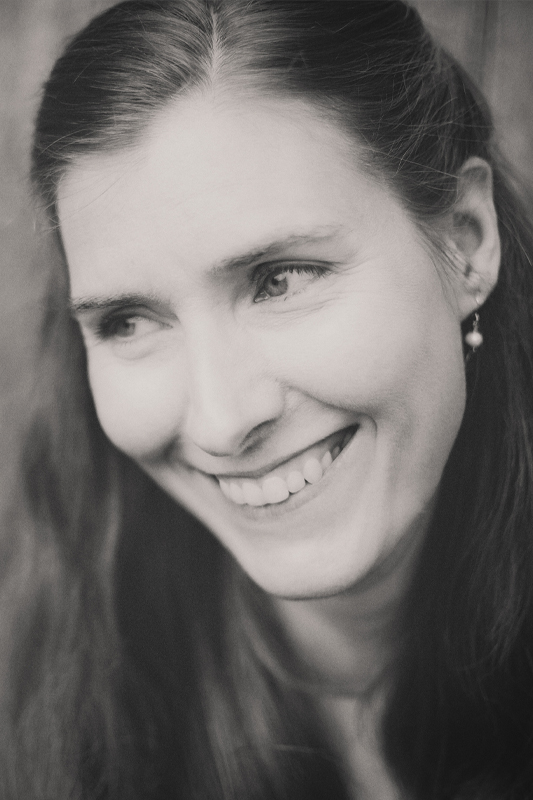
‘Sometimes stories seem to fall in from another world, and writing the poem is just a way of listening to them’, says Fiona Benson, whose Ephemeron (Cape Poetry, 2022) is shortlisted for the T. S. Eliot Prize 2022. We asked Fiona about stories and other worlds
Be among the first to receive updates on the latest T. S. Eliot Prize news by subscribing now!
‘If Vertigo & Ghost explored male violence, then Ephemeron sees Fiona Benson turning her gaze towards the monstrous pain of motherly love’. John Field reviews Fiona Benson’s T. S. Eliot shortlisted collection Ephemeron
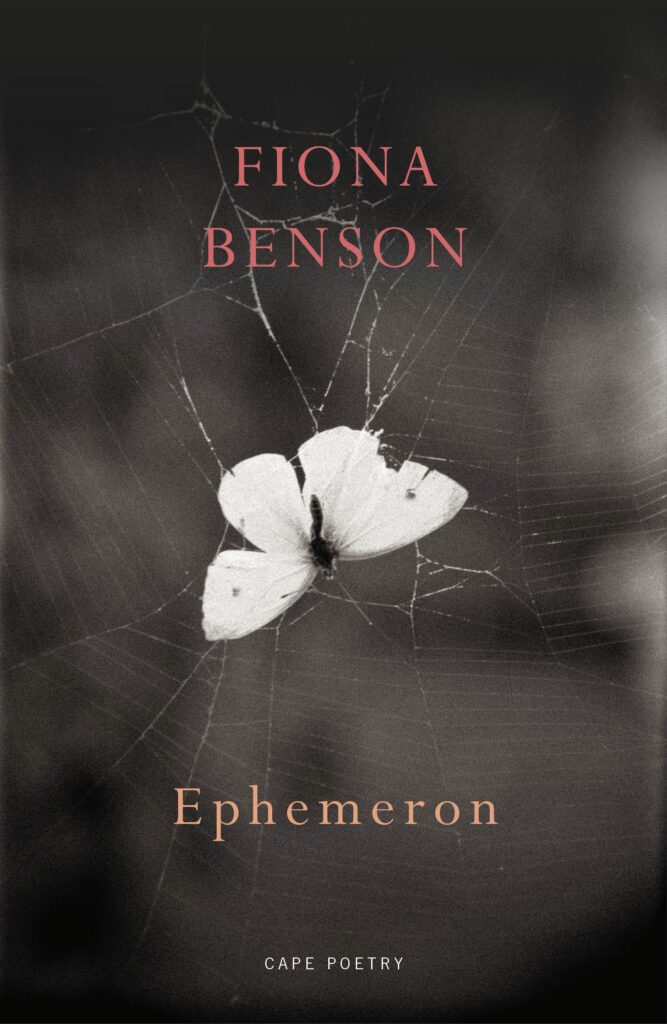
Ephemeron is Benson’s third collection; both of her previous collections, Bright Travellers (Cape Poetry, 2014) and Vertigo & Ghost (Cape Poetry, 2019), were also nominated for the T. S. Eliot Prize. While Vertigo & Ghost opens with an exploration of Zeus, patriarch of the Greek pantheon and the original toxic male, at the centre of Ephemeronsits a sequence exploring the myths surrounding Pasiphaë, mother of the ill-fated Asterios, better known as the Minotaur. If Vertigo & Ghost explored male violence, then Ephemeron sees Benson turning her gaze towards the monstrous pain of motherly love. Through the focal point of Pasiphaë, love, pain and desire refract. The mayfly (or Ephemera danica – one of the allusions in the collection’s title) in its winged state lives for a day; it is this pervading fragility that gives the collection’s rendering of love its almost unbearably painful bite.
Benson opens obliquely with the section Insect Love Songs, and her observations are a riot of the domestic and the forensic. In ‘Mosquitoes, Mozambique’, the value of human life is just a matter of perspective. To us, it’s sacrosanct but, to the humble mosquito, ’your body is a WELCOME mat’. It’s both shocking and comic and, as we blink, the poem changes tone as the mosquito uses ‘two serrated needles / to cut through your tissues, two needles to hold the flesh apart, / one to insert a chemical spit’. The Latin root ‘serra’ of serrated endows the mosquito with a surgical precision as its saws away at the body, using retractors to hold the incision open. It’s clinical, dispassionate. An echo of this is heard in ‘Little Basket,’ the final poem in Daughter Mother, the collection’s final section. A child finds a packet of razor blades with obvious consequences, and all the speaker can think of is her ‘darling desperately trying / to put the razors back with her tiny, soft fingers’. How can we bear to love such fragility with this intensity, living, as we do, so fleetingly?
The second section, Boarding School Tales, is a stunning sequence of poems exploring life’s cruelties and oozes with pheromones. The poem ‘Like a Prayer’ opens with a liturgical image, the speaker and friends ‘Dressed in dazzling, Byzantine white’, perhaps evoking the May-Day dance in Thomas Hardy’s Tess of the D’Urbervilles. In a trice, the schoolgirls ‘ripped off Velcroed skirts’ and their burlesque moves us from the sacred to the sexual, where virginity’s ‘a new pair of Converse / demanding to be scuffed’. Benson’s girls recognise their power. It is they who will teach the boys ‘shudderingly – to pray.’
At the heart of this collection is the section Translations from the Pasiphaë. These monologues have an immediacy and a visceral power that bridge gaps of time, place and culture, and amplify the ideas explored in the book as a whole. In her end notes, Benson observes that Pasiphaë’s alleged copulation with a bull reveals that, ‘Like other powerful women (think Catherine the Great) she is remembered almost solely through the lens of an unlikely sexual deviance’. In ‘Pasiphaë on Wanting’, we see a character who ‘moved in desire, its shining atmosphere, / dilated, ripe, under its enchantment’. The poem places her alleged sexual deviance within the context of an indifferent husband, and so ‘Desire makes beasts to be ridden of us all.’ Pasiphaë is little different from the schoolgirls in ‘Like a Prayer’. The similarities shine a light on the misogyny of myth-making, shaking the prejudices on which societies are built. Motherly love, so painfully rendered in the Daughter Mother section, is powerfully evoked here. Pasiphaë’s son, Asterios, is immortalised in culture as the very definition of monstrosity yet, in ‘Pasiphaë on her Last Newborn’, we see him as Pasiphaë does: ‘He was beautiful, my son. / In his sleep he shone.’ Benson’s short lines and simple statements testify movingly to the truth of this.
The poems in Ephemeron acknowledge life’s cruelty, its brevity and its suffering. However, woven through Benson’s universe is the immortal power of love – and this, she shows us, is enough to redeem us.
Fiona Benson’s Ephemeron (Cape Poetry, 2022) is shortlisted for the T. S. Eliot Prize 2022. John Field blogs at Poor Rude Lines.
Be among the first to receive updates on the latest T. S. Eliot Prize news by subscribing now!

T. S. Eliot Prize: Was entomological terminology an especially pleasurable part of the University of Exeter’s Project Urgency commission? You turn up some very nice words in your book – crypsis, instar, imago, exuvia….
Fiona Benson: Yes! The commission from Exeter was very broad, and allowed me to hone in on insects, which was a subject I was already very attracted to. I adore all the poems that exist about our ‘alpha’ fauna, the mammals – like Seamus Heaney’s badger, or Jen Hadfield’s hedgehog, or Norman MacCaig’s toad, but actually we interact with that kind of fauna once in a blue moon. On the other hand we are surrounded by insects, and know so little about their complex lifecycles and worlds. I loved meeting entmologists and diving into those deep wells of arcane knowledge about individual insects – and yes, the vocabulary of it is intensely pleasurable, and so apt. Exuvia for example just sounds exactly like what it describes. The whole experience was very inspiring.
TSEP: The switching between repulsion, attraction and identification in Insect Love Songs seems to announce the key themes in the book. It’s there in the Pasiphaë section too, in your poem ‘Daedalus’: ‘All craft leads back to nature, / its teeming innovation.’
FB: Yes I think so. I felt that the more I learned about certain insects the less I was freaked out by them – could even take them in my hands and empathise with their drives and vulnerability.
In a much broader sense, humans are often afraid of unknown behaviours. Me too, of course. A long time ago, I worked in an elderly mentally ill unit, and at first I found some of the people I cared for unnerving and strange, until the familiarity of caring for their bodies and developing a relationship with them broke those mental barriers down. When I imagined Asterios/‘the minotaur’ in the context of a society that exposed disabled children to die, I tried in the poems to look through different lenses – the way fearful strangers see him, the way his family see him. Fear is a very distorting lens. I think if we can recognise this, and work through it towards understanding and compassion, the world would be a better place.
TSEP: ‘You think of yourself locked-in, pre-teen’ says the speaker in ‘Leaf Insect’, comparing herself to ‘An insect that has learnt so deeply / to be leaf it almost forgets it can walk’. But many of the insects in Ephemeron do switch form. I really like Wiki’s definition of metamorphosis as ‘a conspicuous and relatively abrupt change in the animal’s body structure’. The changes of state seem to be part of your fascination for them. Is change (abrupt, conspicuous) available to the humans in Ephemeron? Perhaps for the teacher in your poem ‘Ink’?
FB: I’m not sure. All I know is that I am really fascinated by metamorphosis – in folklore and myth, in insect lives. Maybe it’s a metaphor for the imagination. I’d love to be a shapeshifter but am not (hence locked in!) The insects certainly switch form, but they can’t switch back…
TSEP: I listened to the excellent discussion you had with Emily Berry in a 2018 Poetry Review podcast about taboos and risk. ‘We should try to be as brave as our poems’, you say. Is the bravery in Ephemeron to do with facing terror?
FB: A question that’s been coming up lately has been how I keep myself safe when writing some of these poems, and it took me aback at first. What I’ve realised is, that it’s the poems themselves that keep me safe. The danger isn’t in the poems, it’s outside them in the world. Terrible things happen out there. Some of my poems bear witness to that terror, as you call it, and in that way dissent. I hope.
TSEP: You also talked about writing to find the poem, for the poem to emerge, to find out what poem is there. How did that happen with this book, perhaps in comparison with others?
FB: I wrote the insect poems first, and had a surprising amount of faith back then (since lost!) that if I immersed myself in research and followed all the interesting avenues of insect behaviour, then what would happen in the end would be a poem, and luckily poems arrived.
I didn’t intend to write about Pasiphaë at all; in fact, I’d sworn off Greek myth completely. But I taught a course using Cretan myth to inspire poetry, and doodling about in the writing exercises alongside my students, Pasiphaë arrived loud and clear, talking very explicitly about desire, and then with grief about her son. And that series fell out as I researched her story more. Sometimes stories seem to fall in from another world, and writing the poem is just a way of listening to them.
The boarding school poems I didn’t really want to write at all. I almost always preface these poems with the fact that I come from an RAF background, and had been to four or five state schools in different places (including Denmark) before the age of ten. I wore every colour of gingham summer dress, folks. I say this because I am embarrassed to have gone to boarding school, because it is so deeply associated with privilege. Anyway I have spent too long not writing about my childhood and eventually poems will burst out anyway. Which I guess is what happened with the motherhood poems too. Deep in the Republic of Motherhood, you write motherhood.
TSEP: ‘This tale you make us tell again and again’ (‘Queen’s Women: Daedalus and Icarus’). Why do we keep turning to Greek myths when they are so (truly) horrible? Do they inspire pity (only so useful) or fearlessness?
FB: I always have so many questions about Greek myths, usually about the women, who are often skipped over, or the so-called monsters. I think what myths do is leave a lot of gaps for the imagination to run riot in, and to explore contemporary concerns from a slant perhaps.
TSEP: In her maternal munificence ‘Mama Cockroach’ is very lovable and motherly love is also powerfully described in ‘Edelweiss’: ‘how mothers move in the dark like shining wounds, / like gaps in being. She sang, and all the hurt / and beautiful universe, all the souls / came crowding in.’ Though a cockroach is never safe, does a mother ‘somehow coalesce in your last firing cells […] tell you / how deeply you are loved’ (‘Dispatches’)?
FB: This is a very tender question. I think most of us as parents want to comfort our children, who will always be our children, in their hours of darkness. And the thought that we might not be able to is very frightening.
TSEP: Ephemeron deals with many terrors but there is often a glimmering light, a chance phosphorescence. Of course, light’s everywhere in the book – in the several firefly poems, the ‘lit fuse’ in ‘Field Crickets’. Is this unlooked-for light a sign that we don’t live in a deterministic universe? You quote Ginsberg in the Review podcast, and his idea that a few epiphanies in life give us enough to live by.
FB: I’m not good at the big philosophy! But there is such consolation in little moments of light and kindness.
Fiona Benson’s Ephemeron is published by Cape Poetry. Watch the T. S. Eliot Prize filmed readings and interview, and read the reviews and Readers’ Notes online to find out more.
Be among the first to receive updates on the latest T. S. Eliot Prize news by subscribing now!