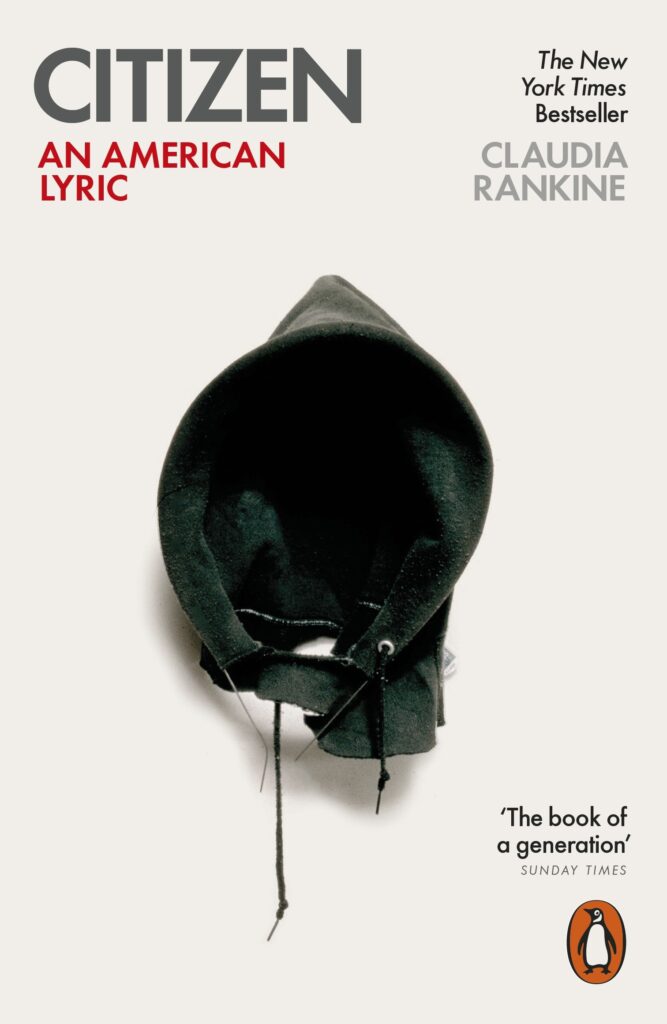
Citizen

Penguin Poetry
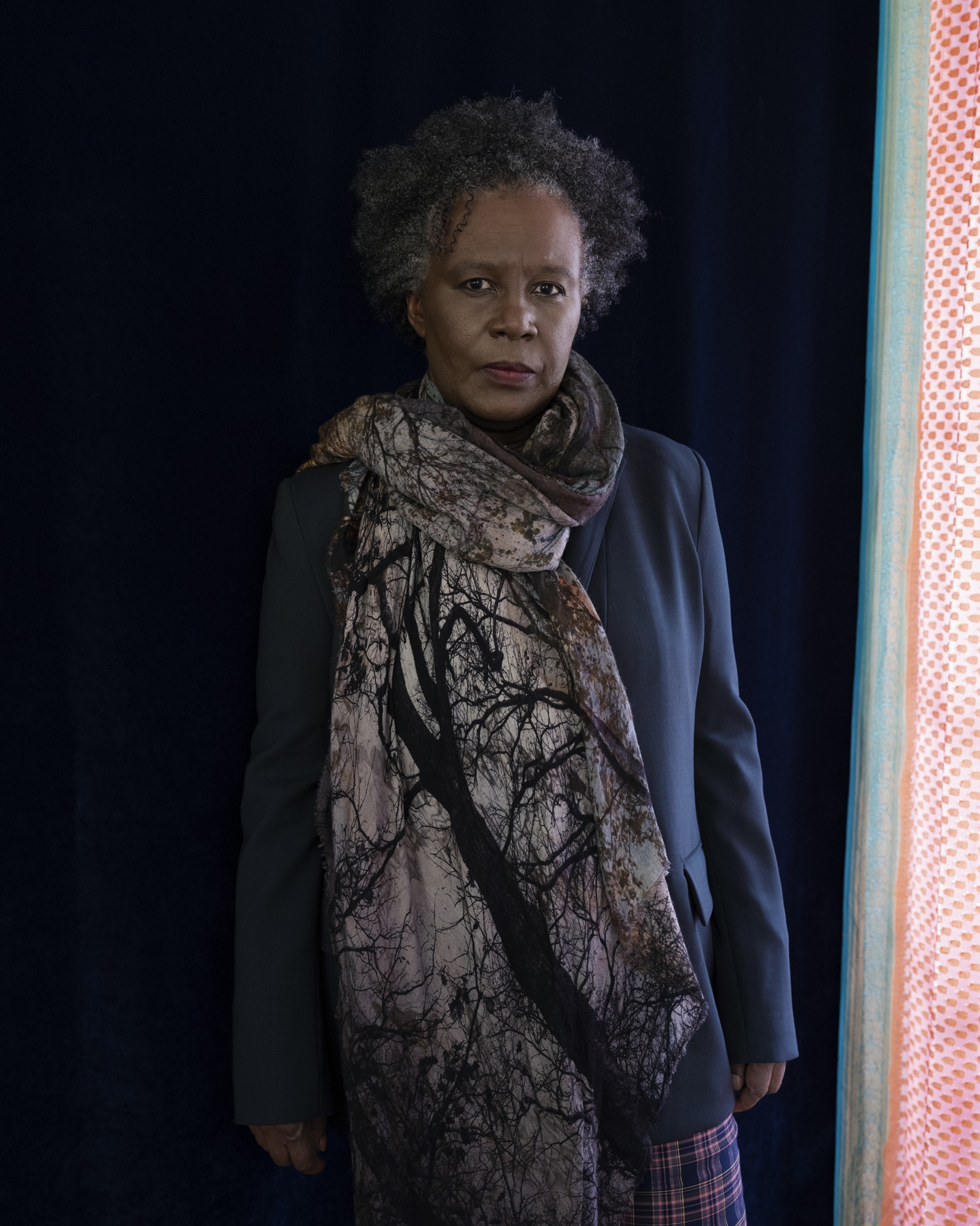
Claudia Rankine headshot
Claudia Rankine was born in 1963 in Jamaica and was raised in Kingston and New York City. Her books include Plot (Grove Press, 2001) and Don’t Let Me Be Lonely: An American Lyric (Graywolf Press, 2004). Citizen: An American Lyric (Penguin) was shortlisted for the T. S. Eliot Prize and won the Forward Prize for Best Collection in 2015. Her recent works include...

Review

Review

With shifting narrative perspectives Claudia Rankine’s Citizen: An American Lyric is bold, experimental book that should be read by all, writes John Field

Videos

Claudia Rankine reads from Citizen at the T. S. Eliot Prize 2015 Shortlist Readings

Related News Stories

This article on the T. S. Eliot Prize was first published on the Poetry Book Society website in 2016.   The Poetry Book Society is delighted to announce that the winner of the T. S. Eliot Prize 2015 is Sarah Howe for her debut collection Loop of Jade, an intimate...
This article on the T. S. Eliot Prize was first published on the Poetry Book Society website in 2015. The Poetry Book Society is delighted to announce a distinguished international Shortlist for the T. S. Eliot Prize 2015, with one poet from the US, one from Jamaica, one from Australia,...
Review of Citizen

With shifting narrative perspectives Claudia Rankine’s Citizen: An American Lyric is bold, experimental book that should be read by all, writes John Field

The source materials for Claudia Rankine’s Citizen, like the sources for T. S. Eliot’s own poetry, reject arbitrary cultural boundaries, ranging from YouTube videos to Maurice Blanchot’s The Space of Literature. However, the backbone of the book comprises the testimony of those who have shared their experiences of racial discrimination with Rankine. The result is a compelling archive, a montage of words, pictures and space which creates an overwhelming portrait of racism – not just in the states, but in the UK too (viewed through the lens of the death of Mark Duggan, shot and killed by the police in Tottenham in 2011).

Saskia Hamilton’s excellent Lannan Foundation interview with Rankine invites us to consider Citizen alongside Wordsworth’s Preface to the 1800 edition of Lyrical Ballads. Here, Wordsworth writes that ‘all good poetry is the spontaneous overflow of powerful feelings’ and that, through his poems, he has tried ‘to bring [his] language near to the language of men’. This is, I feel, a fruitful way to consider Rankine’s book. In her hands, everyday speech is heightened and distilled; fragments of language achieve harmony, or dissonance.

For the most part, Rankine writes in the second person. Besides achieving an unusual, startling intimacy with her reader, this narrative strategy undermines all distinctions, as we all become simply the reader. Here’s Rankine on Serena Williams:

Because of your elite status from a year’s worth of travel, you have already settled into your window seat on United Airlines, when the girl and her mother arrive at your row. The girl, looking over at you, tells her mother, there are our seats, but this is not what I expected. The mother’s response is barely audible – I see, she says. I’ll sit in the middle.

However, Rankine slides away from the second person and her categories become fluid: ‘I they he she we you were too concluded yesterday to know whatever was done could also be done, was also done, was never done—’ and, in the final vignette, Williams, now addressing the reader in the first person, is self-possessed in every way:

Yesterday, I begin, I was waiting in the car for time to pass. A woman pulled in and started to park her car facing mine. Our eyes met and what passed passed as quickly as the look away. She backed up and parked on the other side of the lot. I could have followed her to worry my question but I had to go, I was expected on court, I grabbed my racket.

Without a shred of self-consciousness, or pretentiousness, Rankine has made her twenty-first century blend of the popular and the academic, of print and electronic media, of shifting narrative perspectives feel absolutely necessary. This is a bold, experimental book that should be read by all. I had my copy in my backpack and, meeting a colleague in the street, I was compelled to pull it out, hand it over, and ask her to read it. Who cares whether it’s poetry, or prose – Citizen is necessary and belongs on every school curriculum.

Claudia Rankine’s Citizen (Penguin Poetry) was shortlisted for the T. S. Eliot Prize 2015. John Field blogs at Poor Rude Lines.


Citizen
Penguin Poetry

Newsletter

Be among the first to receive updates on the latest T. S. Eliot Prize news by subscribing now!


The T. S. Eliot Prize on Social Media

Part of tseliot.com

Designed by thinking

Interview of Citizen

Citizen
Penguin Poetry

Newsletter

Be among the first to receive updates on the latest T. S. Eliot Prize news by subscribing now!


The T. S. Eliot Prize on Social Media

Part of tseliot.com

Designed by thinking