
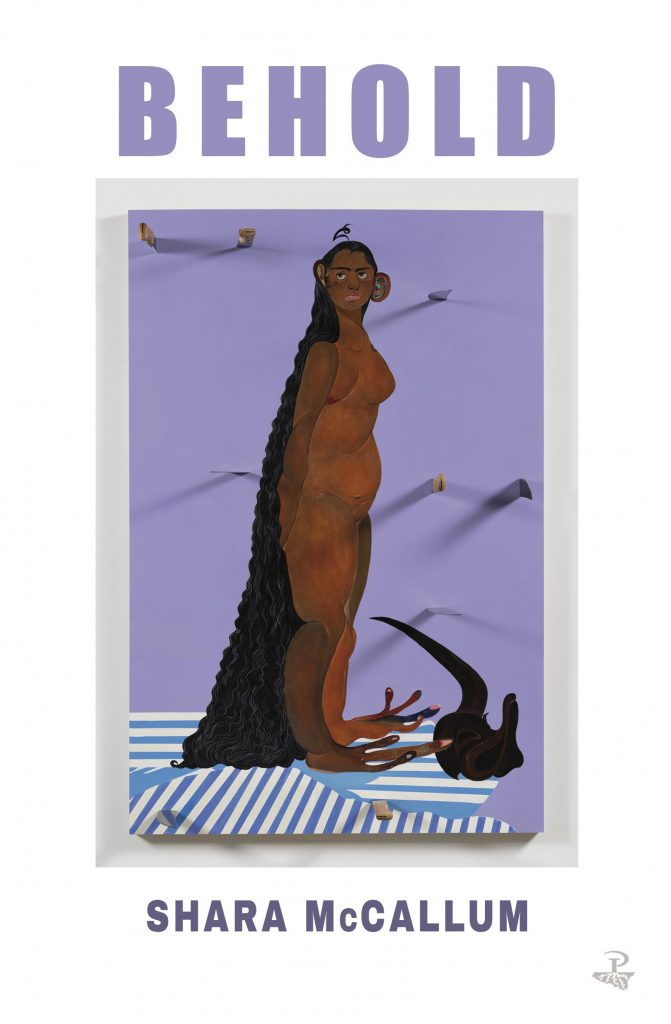
Behold

Peepal Tree Press
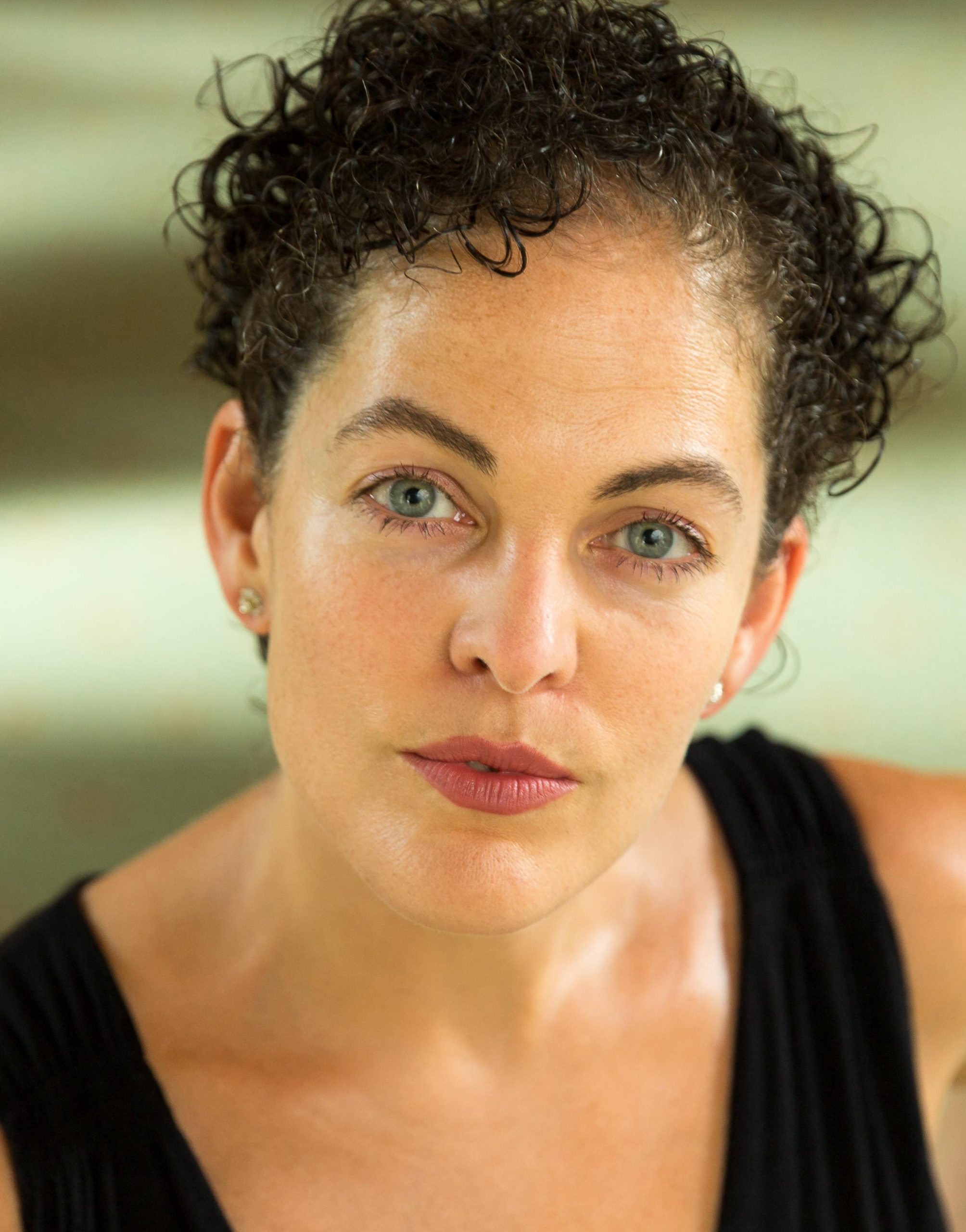
McCallum, Shara 1200x1530 NO PHOTOGRAPHER CREDIT
Shara McCallum is from Jamaica, of Jamaican and Venezuelan parentage. She is the author of seven books of poetry, published in the US and the UK, including No Ruined Stone, winner of the 2022 Hurston/Wright Foundation Legacy Award in Poetry; and Madwoman, winner of both the OCM Bocas Poetry Prize and the Sheila Margaret Motton Book Prize in 2018. She...

Review

Review

Shara McCallum’s Behold affirms the centrality of the arts to our shared humanity and its power to effect change, writes John Field

Read the
Reader's Notes

Review of Behold

Shara McCallum’s Behold affirms the centrality of the arts to our shared humanity and its power to effect change, writes John Field

Behold, Shara McCallum’s seventh poetry collection, is not so much an invitation as an imperative to look. Inherited from Germanic, ‘behold’ is one of the oldest words in the English language and, read with this awareness, to behold is not simply ‘to look’ – it is ‘to hold with our hands’. The connection is physical.

As McCallum comments in the collection’s notes, Behold ‘engages with how we see and are seen’ and ‘Nearly all the poems in the collection are in conversation with visual art’. The collection allows McCallum to curate a fantasy exhibition of Black, Caribbean, Latin American and women artists. Many of the poems are sonnets – little squares hanging on the blank page’s gallery wall, each framed by poetic constraints.

When visiting a gallery, it can be difficult to avoid looking past the painting to the exhibit label on the wall beside it; likewise with McCallum’s ekphrastic works it is tempting to turn to the ‘Notes’ on the artworks at the end of the book. Repeatedly we read variations of the phrase ‘I looked at a photograph of this work many times in Modern Jamaican Art’, so that this ordinary art book is shown to have a formative role in McCallum’s education, becoming a tattered, beloved touchstone. The notes also speak to the power of collection and curation to make the zeitgeist. Several of the works McCallum has seen in person were seen as part of the Boston Museum of Fine Arts’ 2025 exhibition, Tender Loving Care and ‘many were newly acquired.’

A poem which appears early on in Behold is the sonnet ‘Pastoral’, which engages with Albert Huie’s Crop Time (1955), a depiction of a sugar cane harvest from field to refinery. It’s one of the paintings in McCallum’s well-thumbed Modern Jamaican Art, though she finally viewed it in Kingston’s National Gallery of Jamaica. Encounters like these are uncanny as a viewer can enter an unfamiliar gallery in an unfamiliar city only to feel as if they have come home: ‘This is the Jamaica you were not born / into’, begins the speaker. Jamaica had been free from British colonial rule for a decade when McCallum was born in 1972, and perhaps Huie’s painting played its own small part in turning the colonial tide: the Jamaican people are the focus of the composition. It’s a scene of backbreaking labour but the speaker’s simile offers a tentative reading of joy and artistry as ‘men raise / machetes as if in choreographed motion’. Is this reading Huie’s, or the speaker’s? The volta draws the eye to the odd one out: in the centre of the foreground, we see that ‘Only one figure on this canvas / faces front, holding a reed to his lips. / You want to believe he is the piper.’ The collection’s introductory poem, ‘Passage’, engages with the myth of Orpheus and Eurydice:

I remember
as each time before
I remember
why I cannot stay and why
I must abandon you here.

Huie’s social realism now assumes a mythological dimension and the emissions from the smokestacks, ‘The smell, / that burning is in you still’, become tinged with the sulphur of the underworld.

Behold celebrates the act of reading: its creativity, its variance. In ‘I Would Like to Know What the River Knows’ the speaker looks at Henry Daley’s River Scene, a painting which most readers will only be able to ‘see’ through McCallum’s eyes as mediated by her poem. The octave offers cleansing and renewal as the river ‘washes boulders or smooths as it runs’. However, the sestet brings a change of tone as, in this unpopulated, seemingly unspoiled landscape, the viewer is present, their ‘imposing eye scrawling / the violence done on this land to this land’. Daley’s painting dates from 1943, and on the mind’s canvas, the viewer cannot help but to scrawl the indignities drawn on the present-day physical landscape onto Daley’s painted vision. It’s a new reading and perhaps not one which Daley would have anticipated, but it is a valid, necessary, urgent reading, nevertheless.

As McCallum observes in the notes, President Trump’s second term has brought with it ‘cultural bans and the defunding of many institutions that support art and artists’ in the United States. Behold is a cri de coeur which affirms the centrality of the arts to our shared humanity and its power to change our communities – the whole world, even – for the better.

Shara McCallum’s Behold (Peepal Tree Press) is shortlisted for the T. S. Eliot Prize 2026. John Field blogs at Poor Rude Lines.

Behold
Peepal Tree Press

Newsletter

Be among the first to receive updates on the latest T. S. Eliot Prize news by subscribing now!

The T. S. Eliot Prize on Social Media

Part of tseliot.com

Designed by thinking

Interview of Behold

Behold
Peepal Tree Press

Newsletter

Be among the first to receive updates on the latest T. S. Eliot Prize news by subscribing now!

The T. S. Eliot Prize on Social Media

Part of tseliot.com

Designed by thinking