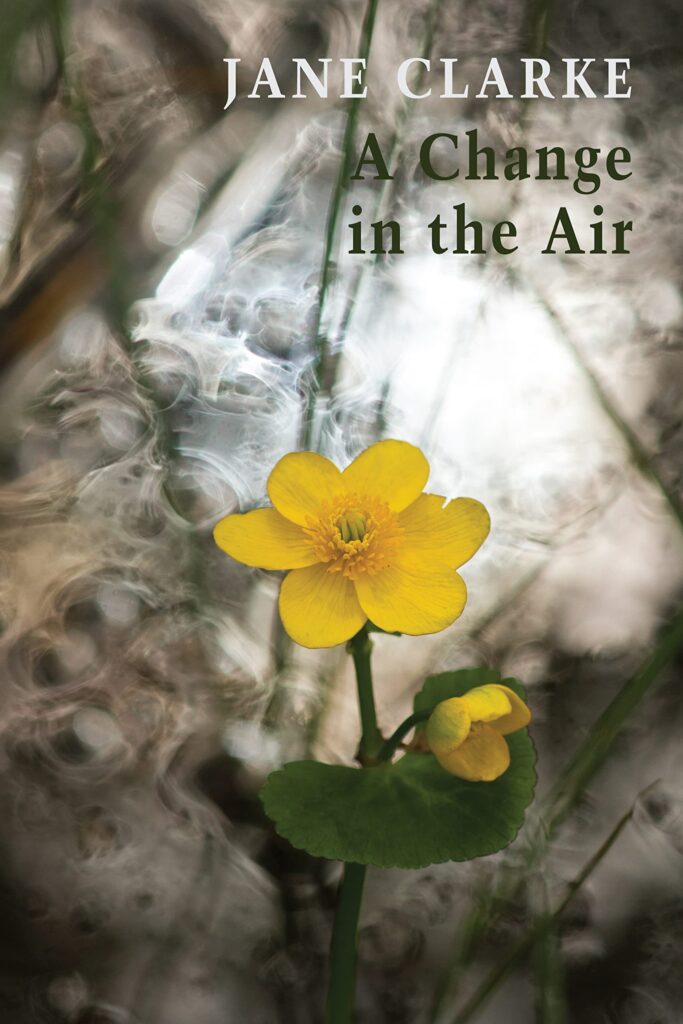
A Change in the Air

Bloodaxe Books
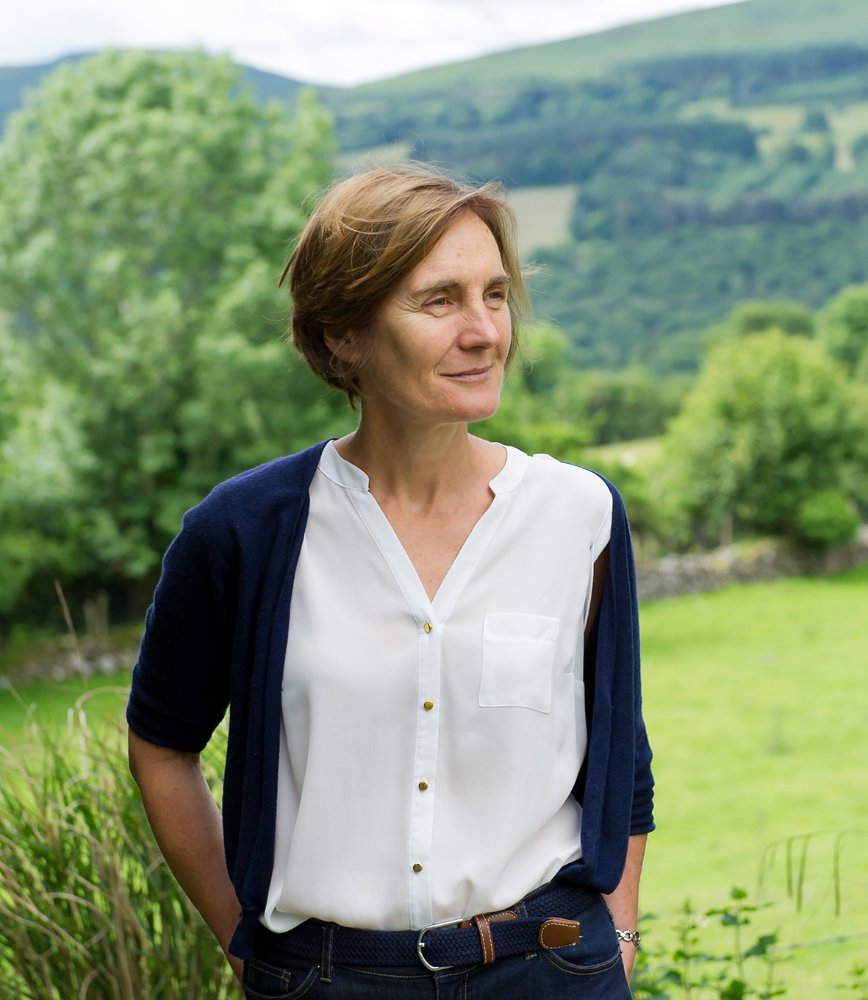
Jane-Clarke-c-Elementum-RGB-RESIZED
Jane Clarke’s first collection, The River (Bloodaxe Books, 2015), was shortlisted for the Royal Society of Literature’s Ondaatje Prize. Her second collection, When the Tree Falls (Bloodaxe Books, 2019), was shortlisted for the 2020 Pigott Poetry Prize, the Irish Times Poetry Now Award and the Farmgate Café National Poetry Award 2020, and was longlisted for the Ondaatje Prize 2020. Her...

Review

Review

Jane Clarke’s A Change in the Air is a precise and moving exploration of family, loss, consolation and community, writes John Field

Read the
Reader's Notes

Videos

Jane Clarke reads from A Change in the Air at the T. S. Eliot Prize Shortlist Readings
Evelyn Byrne reviews Jane Clarke‘s A Change in the Air
Jane Clarke reads ‘Spalls’
Jane Clarke talks about her work
Jane Clarke reads ‘Recipe for a Bog’
Jane Clarke reads ‘Pit Ponies of Glendasan’

Related News Stories

The T. S. Eliot Foundation is delighted to announce the winner of the T. S. Eliot Prize 2023 is Jason Allen-Paisant for his second collection Self-Portrait as Othello, published by Carcanet Press. The judges Paul Muldoon (Chair), Sasha Dugdale and Denise Saul said: Self-Portrait as Othello is a book with...
When the T. S. Eliot Prize founded the Young Critics scheme with The Poetry Society’s Young Poets Network, the aim was to empower young critics, to offer a different critical viewpoint on the shortlisted collections, and to engage more young readers with the Prize. Following a series of workshops led...
We are thrilled to announce the T. S. Eliot Prize 2023 Shortlist, chosen by judges Paul Muldoon (Chair), Sasha Dugdale and Denise Saul from 186 poetry collections submitted by British and Irish publishers. The list comprises a former winner and two previously shortlisted poets, as well as two debuts and two...
As the T. S. Eliot Prize celebrates its 30th year, the T. S. Eliot Foundation is delighted to announce the judges for the 2023 Prize: the panel will be chaired by Paul Muldoon, alongside Sasha Dugdale and Denise Saul.  The judges will be looking for the best new poetry collection...
Review of A Change in the Air

Jane Clarke’s A Change in the Air is a precise and moving exploration of family, loss, consolation and community, writes John Field

A Change in the Air, Jane Clarke’s third collection, is a quiet, stoical meditation on fragility and mortality. Humanity takes its place within the rhythms of a natural world built on acceptance, community, and renewal. The title promises the best kind of revolution: freshness and wholesomeness – and the poems which follow deliver on this.

The collection opens with a series exploring family life, and the first of these, ‘After’, presents a withdrawal from the world: ‘Now that her heart is bent over / like larkspur after a storm, // she stays in bed past milking time, / pulling the quilt // tight around her shoulders / until her collie barks her // down the stairs’. There’s a Modernist, Imagistic quality to Clarke’s couplets. Perhaps there’s a sliver of symbolism here too as, in Greek mythology, the mourning Apollo transforms the corpse of the youth Hyacinthus into larkspur. A few poems later, in ‘All she needed’, the speaker’s sitting with her granny: ’I leaned back / against her knees, my cheeks red // as the turf flames’. There’s a satisfying immediacy and a homespun honesty as we share in life’s simple pleasures: the smell of the fire, a feeling of warmth. In the kitchen, sometimes the skill is in knowing when to let the ingredients speak for themselves.

The third sequence of poems is written in response to a First World War family archive held in the Mary Evans Picture Library, London, and, even here, Clarke explores the beauty of simplicity, asking us how much is enough as she revels in the smallest dreams. ‘In the dugout’ sees infantrymen, typical blokes, dreaming big, competing like Monty Python’s Four Yorkshiremen: ‘In the beginning their plans were bold, / one chap keen to outdo the next’ but, as the horror unfolds, their dreams appear to wither on the page as lines of poetry withdraw into themselves. Now the men dream to: ‘hold my mother’s hand, / watch my children sleep’. Earlier in the poem, ‘to’ precedes the infinitive, but even this is stripped away. However, this reduction is better understood as enrichment rather than as loss. The speaker observes their ‘wishes distilled to the final drop / like Scotch in a copper still’. Every poem deals in quality, not quantity. The reader is invited simply to savour the moment… to savour the language. In ‘Thief in April’ we encounter a red squirrel stealing from a bird feeder: ‘and he’s gone, / needle-nimble // down the trunk’. That phrase, ‘needle-nimble’ – it’s a fleeting pulse of trochaic energy, an arresting moment of miniaturised precision and beauty.

Most poems in the collection are built with couplets and, even here, there’s a sense that Clarke shows the reader how little we need. In ‘Milk’, the speaker’s milking a cow, ‘her warm teats filling my hands, / that have been so empty and cold’. A connectedness with the natural world is presented as enough to fill the void left by loss and grief. We encounter this sentiment once again in ‘Spalls’, from the collection’s final section. Spalls are small chips of stone and the speaker’s parents visit to help her in the garden. A note – not of discord exactly – but of different hopes and dreams is introduced as we’re told that ‘they’d have preferred a husband and children // but their daughter loved a woman’. The conjunction ‘but’ introduces a degree of tension. However, the final couplet offers a glorious resolution as the father spends hours alone, sizing stones and ‘By evening he’d built us a wall under the holly, held together / by gravity and friction, hearted with handfuls of spalls.’ ‘To heart’ – it’s a term used by stonemasons and means filling a void with rubble, but there’s ‘heart’ in the conventional sense here too. Yes, there’s friction, but here it’s holding the structure together.

A Change in the Air offers a generous-hearted view of the world. The COVID-19 pandemic stalks the final few poems. ‘Fences’ invites us to imagine a community torn asunder by social distancing but held together as a community of the mind, the speaker imagining ‘one of our neighbours / will be calling children for dinner’ and, by the poem’s end, love and care operates perfectly at one remove with ‘the currant bread left on a doorstep.’ In ‘At Purteen Harbour’, we’re shown a locality devastated by overfishing but the basking sharks return: ‘It’s as if we’ve been forgiven – / a school of twelve cruised into Keem Bay, // moon tails swishing, fins proud / as yawl sails above the waves.’

The whiskey still is a fitting metaphor for this collection. In Jane Clarke’s hands, clarity, purity and strength speak for themselves. Her words are weighed and used sparingly, they take your breath away.

Jane Clarke’s A Change in the Air (Bloodaxe Books, 2023) is shortlisted for the T. S. Eliot Prize 2023. John Field blogs at Poor Rude Lines.

A Change in the Air
Bloodaxe Books

Newsletter

Be among the first to receive updates on the latest T. S. Eliot Prize news by subscribing now!


The T. S. Eliot Prize on Social Media

Part of tseliot.com

Designed by thinking

Interview of A Change in the Air

A Change in the Air
Bloodaxe Books

Newsletter

Be among the first to receive updates on the latest T. S. Eliot Prize news by subscribing now!


The T. S. Eliot Prize on Social Media

Part of tseliot.com

Designed by thinking