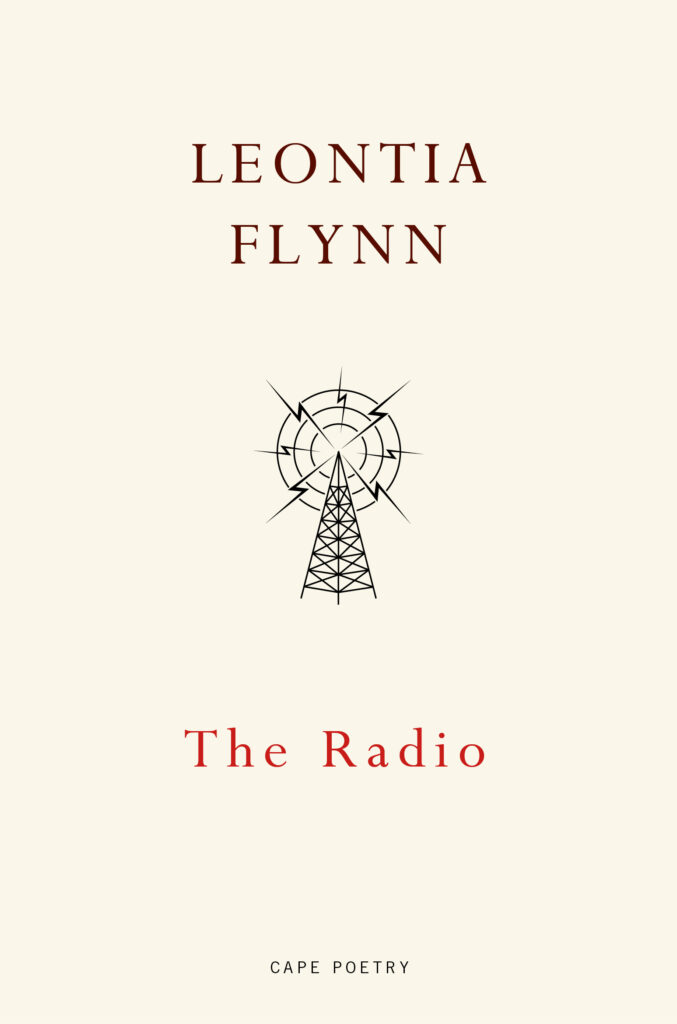

The gossamer threads of Leontia Flynn’s The Radio connect present with past, highlighting continuity and communality while acknowledging the fragility of the networks that bind us – and that bind the individual, neurone by neurone, into a person, writes John Field
Be among the first to receive updates on the latest T. S. Eliot Prize news by subscribing now!
The gossamer threads of Leontia Flynn’s The Radio connect present with past, highlighting the continuity and communality of human experience while acknowledging the fragility of the networks that bind us to one another – and that bind the individual, neurone by neurone, into a person
In Leontia Flynn’s The Radio, we start ‘In the beginning’, with a sonnet borrowing its title from Genesis and referencing the creation but debunking the desire to write hagiographies. We learn that ‘Darwin wrapped his trunk / in ice-cold towels’ and ‘trunk’ rehumanizes Darwin as solid, fleshly and mortal. The sestet casts its line ‘back through the Mists of Time to some first cause’ to find the first migraine, the first hangover and these link us as a human chain.
Later, Flynn translates Catullus 8. In the source text, Catullus opens introspectively as the speaker address himself in the second person: ‘Miser Catulle, desinas ineptire, (poor Catullus, ‘tis time you should cease your folly) whereas in Flynn’s ‘Give it up, moron: after Catullus 8’ it is, perhaps, the reader who is referred to as the titular ‘moron’ and, as a result, the poem widens its address: ‘Give it up, moron: forget it all. / Chalk up among your losses what’s now lost for good.’ In Catullus 28, he rails against corrupt bureaucrats, and specifically against the lackeys of Piso. Flynn’s ‘Government servants’ universalise the corruption and, where Catullus, screwed, was forced to take ‘the whole length of his beam’, Flynn’s speaker has been fucked over. The details of person and place are irrelevant: the shenanigans of the SPQR are replicated throughout history.
Flynn’s dialogues evoke the plays of W. B. Yeats. Yeats idealises and romanticises women and motherhood in The Countess Cathleen, presenting Cathleen as saintly: ‘I gave for all and that was all I had. Look, my purse is empty’. In contrast, Flynn’s ‘Woman, in receipt of infant under two years’ is unromanticized, trapped in a ‘cycle of blood and excrement’. Rearing a child, this cycle feels endless but, in the mode of Yeatsian symbolic drama, Flynn speaks of the timeless cycle of motherhood itself. Her ‘Man, impatient with the women of Ireland discovering the immemorial condition of motherhood for the first time’ seeks to silence her but Flynn’s woman is as earthy of mouth as she is in duty: ‘Fuck off. You praise ‘women’ while you fail them / like drunks and statesmen’.
Mothers feature centre stage in the collection. In the sonnet ‘Yellow Lullaby’, Flynn opens with an epigraph from Louis MacNeice’s ‘Autobiography’ before riffing on this memory of his mother: ‘A yolk. / A yellow flower. / A candle flame’ but the line is stretched taut across the page like a gossamer thread, a thread which connects to the speaker’s own experience of motherhood and, ultimately ‘with the unborn and the dead’.
Threads of connection are broken painfully. In ‘Alzheimer’s Villanelle’, the poetic form is artfully employed to break and reform connections like misfiring neurons and, in ‘August 30th 2013’, Flynn elegises the death of Seamus Heaney. ‘Twitter erupts, it seems in shards of verse’ and suggests an ambivalence to the web of social media powering the modern world as ‘our standard is the dollar; / spurred by the age’s itchy self-promotion, / – our only term of value now ‘best-seller’. Flynn’s ‘shards’ suggest something broken about our world. It was ever thus: in ‘Hugh Selwyn Mauberley’, Ezra Pound also rails at a world in which ‘The pianola ‘replaces’ / Sappho’s barbitos’.
In ‘The Radio’, Flynn wears her erudition lightly and this moving reflection on mothers, history and mortality never takes itself seriously for too long.
Leontia Flyn’s The Radio (Cape Poetry) is shortlisted for the T. S. Eliot Prize 2017. John Field blogs at Poor Rude Lines.
Be among the first to receive updates on the latest T. S. Eliot Prize news by subscribing now!