
Peter Gizzi was born in Alma, Michigan. He is the author of eleven collections of poetry, including: Now It’s Dark (2020); Archeophonics (2016), a finalist for the National Book Award; Threshold Songs (2011); In Defense of Nothing: Selected Poems, 1987–2011 (2014); and Sky Burial: New & Selected Poems (Carcanet Press 2020). In 2018, his work was the subject of In...
Review
Review
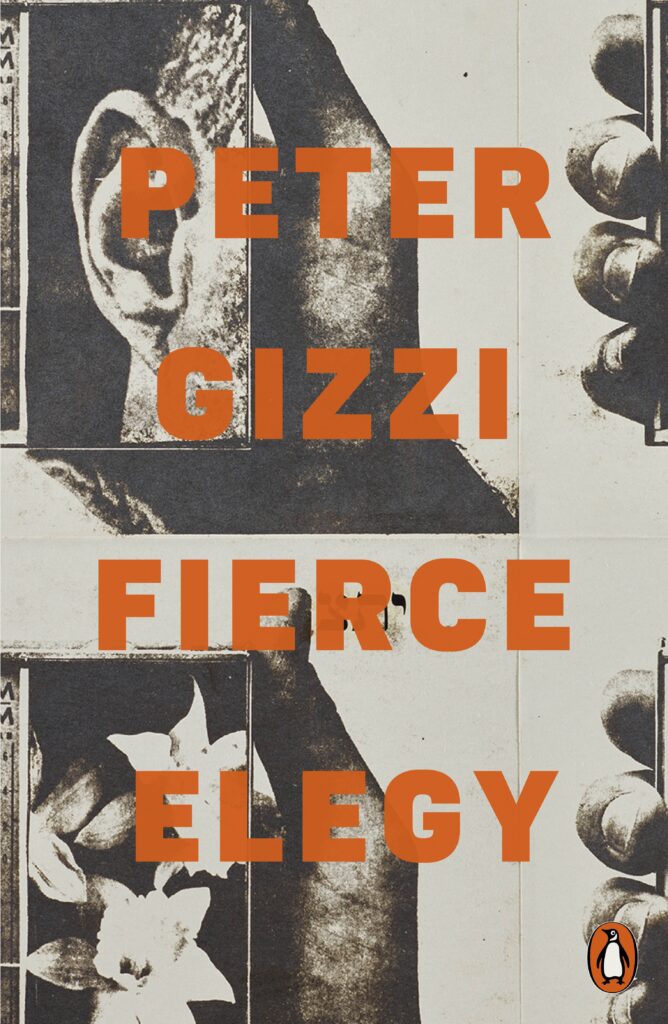
Peter Gizzi’s Fierce Elegy is ‘worldly-wise, generous, warm and human’, writes John Field
Read the
Reader's Notes
Videos
Peter Gizzi reads from Fierce Elegy at the T. S. Eliot Prize Shortlist Readings
Young Critic Eira Murphy reviews Peter Gizzi’s Fierce Elegy
Peter Gizzi talks about his work
Peter Gizzi reads ‘Ecstatic Joy and Its Variants’
Peter Gizzi reads ‘Revisionary’
Peter Gizzi reads ‘Findspot Unknown’
Related News Stories
There was a brilliant response to the T. S. Eliot Prize 2024 Shortlist Readings, held at the Royal Festival Hall, London, on 12 January 2025. Each of the ten shortlisted poets, including Karen McCarthy Woolf (shown above) gave extraordinary readings at what is the largest annual poetry event in the...
The T. S. Eliot Foundation is delighted to announce the winner of the T. S. Eliot Prize 2024 is Peter Gizzi for Fierce Elegy, published by Penguin Poetry. Chair Mimi Khalvati said: We are delighted to welcome and honour a work that is infinitely sad yet resolute, and so fully...
The T.S. Eliot Prize and The Poetry Society are delighted to publish the first five of ten video reviews created by participants in this year’s Young Critics Scheme. ‘The videos combine both dazzling critiques and visuals,’ said Michael Sims, Director of the T. S. Eliot Prize, calling the reviews ‘a...
I say ‘fierce elegy’ because for me the elegy is a fierce mode that can take a broken heart in a fierce world and transform it into a fierce heart in a broken world. – Peter Gizzi, T. S. Eliot Prize film interview Peter Gizzi, shortlisted with his collection Fierce...
We are thrilled to announce the T. S. Eliot Prize 2024 Shortlist, chosen by judges Mimi Khalvati (Chair), Anthony Joseph and Hannah Sullivan from 187 poetry collections submitted by British and Irish publishers. The eclectic list comprises seasoned poets, two debuts, two second collections, and two previously shortlisted poets from...