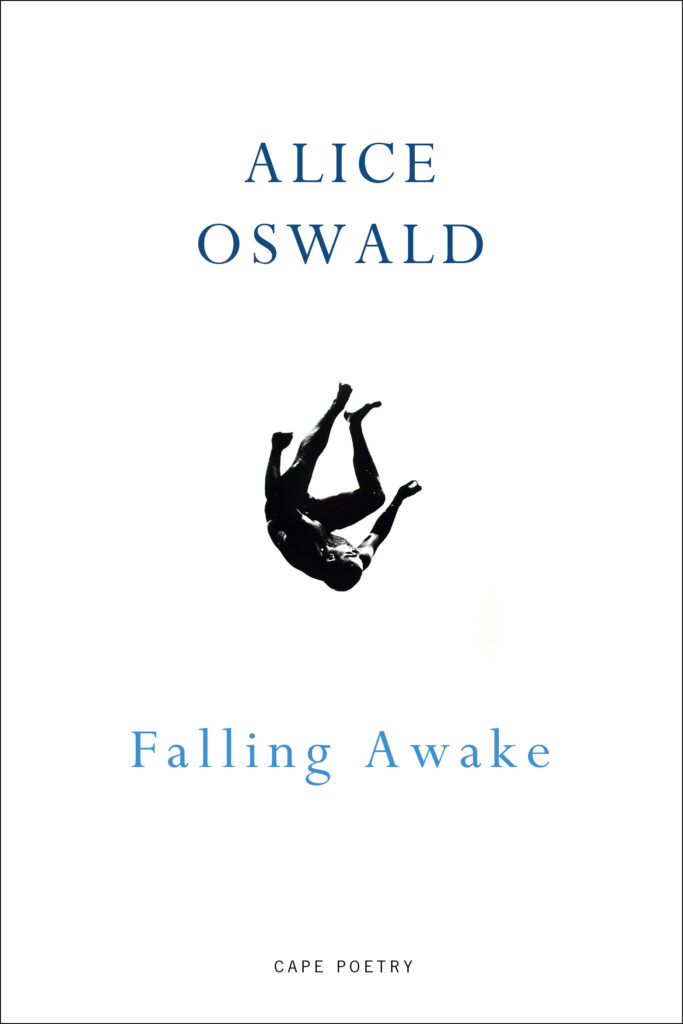
Falling Awake

Cape Poetry
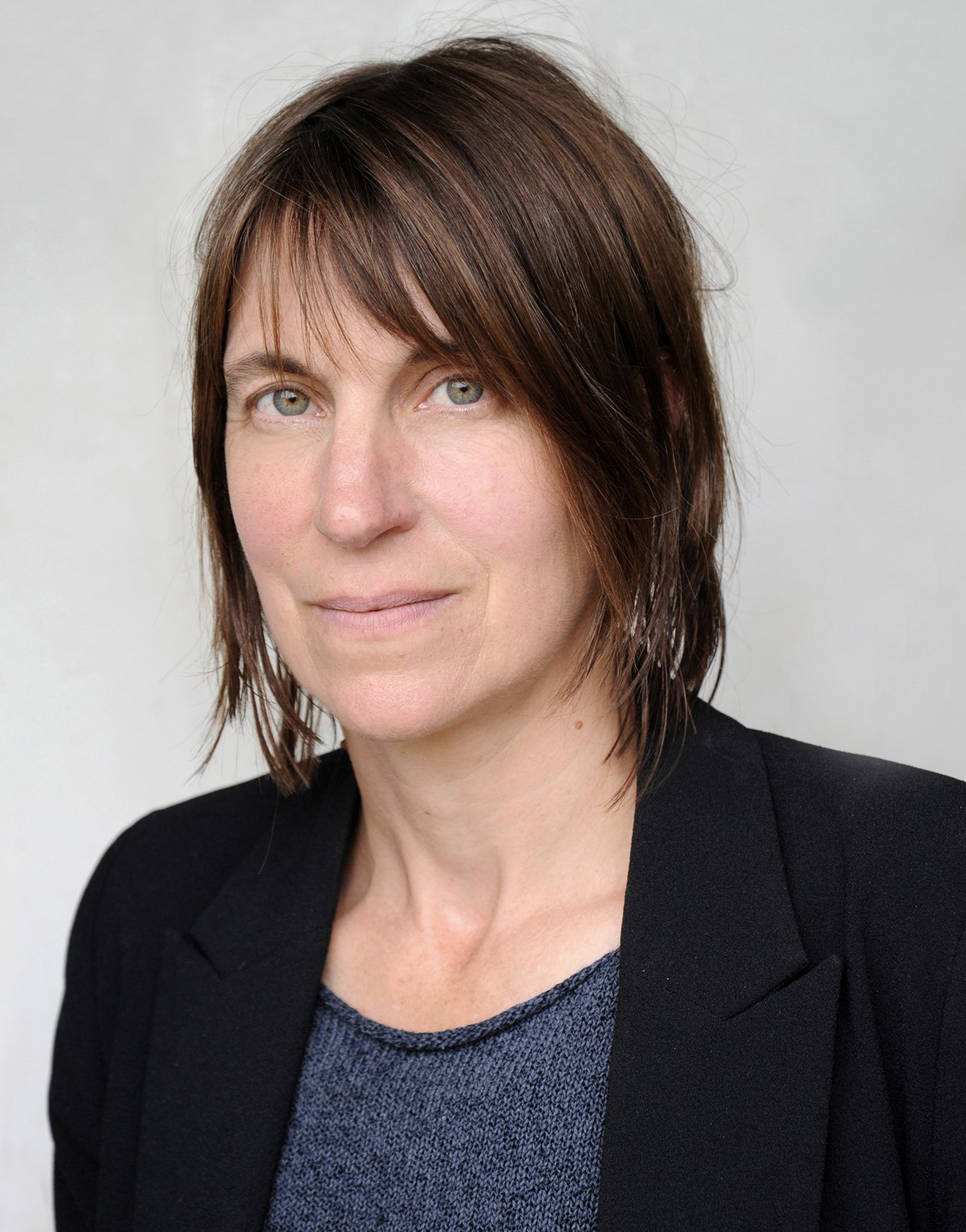
Alice Oswald © Kate Mount 1200 x 1530
Alice Oswald lives in Devon and is married with three children. Her first collection of poetry, The Thing in the Gap-Stone Stile (1996), received a Forward Poetry Prize for Best First Collection. Her collections include Dart, which won the T. S. Eliot Prize 2002 and was a Poetry Book Society Choice; Woods etc. (which won the Geoffrey Faber Memorial Prize);...

Review

Review

In Falling Awake, Alice Oswald 'offers us no ordinary experience of mutability – her ambition is cosmic and repurposes those little buzzing windowsill deaths', writes John Field

Videos

‘Shadow’ by Alice Oswald

Related News Stories

Jacob Polley’s disturbing tale of lost innocence wins world’s most prestigious poetry prize The T. S. Eliot Foundation is delighted to announce that the winner of the T. S. Eliot Prize 2016 is Jacob Polley for his remarkable new collection Jackself. After months of reading and deliberation, judges Ruth Padel...
To help readers engage fully with the T. S. Eliot Prize 2016 Shortlist, we asked poetry blogger and regular Eliot Prize reviewer John Field to explore the shortlisted titles. In his review of Rachael Boast’s Void Studies, John Field writes, ‘Reading Void Sudies is a sensual, sensory joy. Like music,...
The T. S. Eliot Prize is delighted to announce the thrilling 2016 Shortlist, featuring exciting newcomers and established names. Judges Ruth Padel (Chair), Julia Copus and Alan Gillis have chosen the Shortlist from 138 books submitted by publishers: Rachael Boast – Void Studies (Picador Poetry) Vahni Capildeo – Measures of...
Review of Falling Awake

In Falling Awake, Alice Oswald ‘offers us no ordinary experience of mutability – her ambition is cosmic and repurposes those little buzzing windowsill deaths’, writes John Field

Sometimes we think that the cycle of the seasons offers an immortality of sorts. There’s the pallid Keats, imagining, in ‘Ode to a Nightingale’, that the song he hears is the self-same song as was heard ‘In ancient days by emperor and clown’ and, as Alice Oswald opens Falling Awake with ‘A Short Story of Falling’, we’re left expecting the collection to deliver more of the same.

She presents a series of euphoric rhyming couplets, revelations of eternity which evoke William Blake’s ‘Auguries of Innocence’ – ‘To see the World in a Grain of Sand / And a Heaven in a Wild Flower’. Oswald writes of the story of falling that ‘It is the story of falling rain / to turn into leaf and fall again // it is the secret of a summer shower / to steal the light and hide it in a flower’. Although there’s repetition in these natural cycles, there’s a freshness as nature metamorphoses and, as the poem reaches its final stanza – which closely resembles the first, the poem’s circular structure presents us with infinity.

However, this joyful seasonal eternity is problematized as the collection unfolds. Oswald first presents a series of vignettes, focusing on a dead swan, flies on a windowsill, a badger and these poems darken the mood. In ‘Flies’, Oswald presents life as an abrupt interruption. Life: it’s a hot, dirty, insignificant business – little more than dropping litter as the flies ‘drop from their winter quarters in the curtains / and sizzle as they fall / feeling like old cigarette butts called back to life / blown from the surface of some charred world.’ And then Oswald’s focus turns to us, finishing the poem with the collection’s characteristic unfinished, searching repetition: ‘what should we / what dirt should we’.

The collection inverts and destabilises our regular perspectives. ‘Looking Down’ opens with ‘Clouds: I can watch their films in puddles / passionate and slow without obligations of shape or stillness // I can stand with wilted neck and look / directly into the drowned corpse of a cloud’. The puddle feels like the veil separating the world from the underworld. We are ‘wilted’, weak and closer to death than to life and, viewing the world through death’s lens, all we can see is its ‘drowned corpse’: the mutability of all things, despite the seemingly eternal repetition of processes like the water cycle.

At the collection’s centre lies ‘Tithonus’, Oswald’s aubade, her hymn to the dawn. Zeus made Tithonus immortal but without arresting the ageing process. The visual quality of the poem is difficult to convey – a graduated line runs through the poem and musical cues are added on the left, with the rest of the material appearing on the right. This device threads a backbone of time through the poem. Some pages present silence, as the graduations are unaccompanied by text. And so we return to ‘A Short Story of Falling’s’ cyclic optimism, except here: ‘a voice goes on arguing / in its sleep like a file going to and / corrosively fro’. When replicated often enough, computer files collect digital artefacts. Whispered often enough, the message corrupts. In time, the storage media will fail.

We like to imagine that mutability is limited to the self but, inevitable errors in coding will ensure that, in time, whole species will feel the pinch of old age.

In Falling Awake, Oswald offers us no ordinary experience of mutability – her ambition is cosmic and repurposes those little buzzing windowsill deaths.

Alice Oswald’s Falling Awake (Cape Poetry) is shortlisted for the T. S. Eliot Prize 2016. John Field blogs at Poor Rude Lines.

Falling Awake
Cape Poetry

Newsletter

Be among the first to receive updates on the latest T. S. Eliot Prize news by subscribing now!


The T. S. Eliot Prize on Social Media

Part of tseliot.com

Designed by thinking

Interview of Falling Awake

Falling Awake
Cape Poetry

Newsletter

Be among the first to receive updates on the latest T. S. Eliot Prize news by subscribing now!


The T. S. Eliot Prize on Social Media

Part of tseliot.com

Designed by thinking