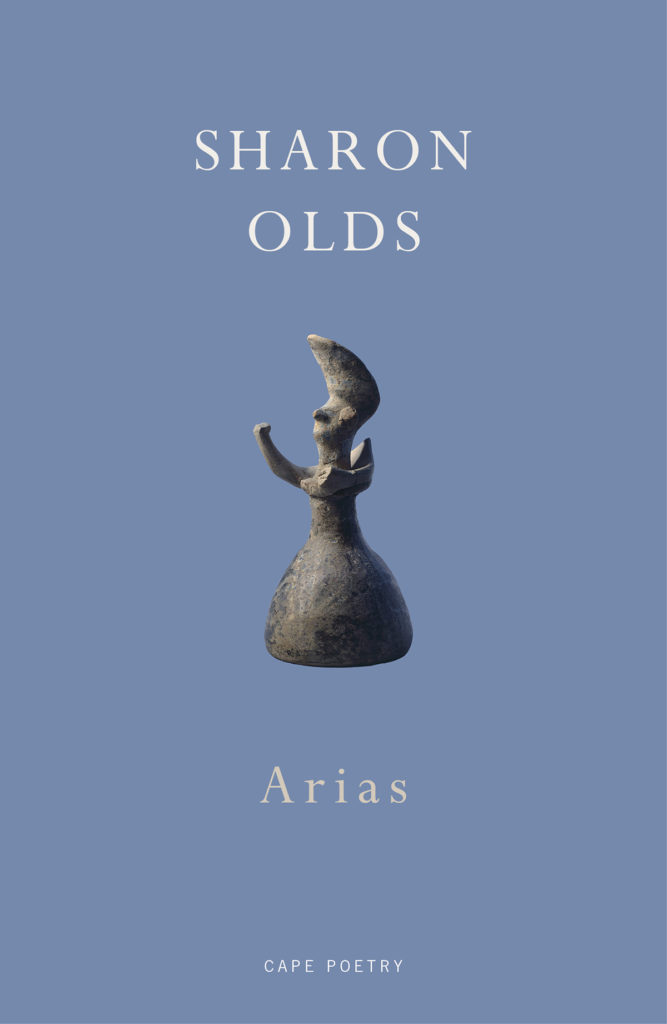
Sharon Olds’s Arias might feel operatic, weighing in at 205 virtuosic pages. There is no fat, however. In its heartbreaking, forensic exploration of fragility and mortality, it’s metaphysical poetry at its keenest and finest, writes John Field
Be among the first to receive updates on the latest T. S. Eliot Prize news by subscribing now!
Sharon Olds’s Arias might feel operatic, weighing in at 205 virtuosic pages. There is no fat, however. In its heartbreaking, forensic exploration of fragility and mortality, this is metaphysical poetry at its finest and keenest, writes John Field
When we think of arias, we think of bombastic numbers from great operas, but the word’s root is in ‘air’, reminding us that even the music’s keystones exist fleetingly, as soundwaves, borne on the moment before spiralling into nothing.
At first glance, Sharon Olds’s latest collection might feel operatic. It’s a substantial volume, weighing in at 205 virtuosic pages. However, it delivers a heartbreaking, forensic exploration of fragility and mortality. It’s metaphysical poetry at its finest and keenest, with Olds channelling the fearlessness of John Donne. One might be forgiven for presuming that there is available fat to trim from a collection this size – but not so. The poems offer a broad spectrum of experience, but the collection focuses this into a beam of pure light and energy. The result is exhilarating.
Olds’ trademark domestic and physical intimacy comments on broader social and political issues and she sets the tone with the opening poem, ‘For You’. The speaker fixes breakfast, watching the birds in the garden: ‘I report them as I seek them, / so as not to forget: tray, cell phone, / purple martin, Trayvon Martin’. Here language is unstable, configuring and reconfiguring in the mind – evidence of the barely repressed trauma bubbling away in the American subconsciousness: the young Trayvon Martin was shot to death in the gated, guarded community in which he was staying in 2012. That a 2012 gun crime opens a 2019 collection comments on the cumulative damage dealt by every fresh outrage to the American psyche.
Olds questions her right to document American trauma. In ‘looking South at Lower Manhattan, Where the Towers had Been’, she speculates about whether ‘song can be harmful, in its ignorance / which does not know itself as ignorance’ and apologizes to ‘that raw bright metal / we contain’. As Olds focuses her forensic gaze on matters of combustion and chemistry, she still finds our dignity and beauty, ‘raw and bright’.
It feels significant that Olds includes both time and place in the title of ‘My Parents’ Ashes (New York City, October, 2001)’. As the collection explores intimate moments, the World Trade Center casts its long shadow. Personal and private histories intermingle, and the speaker wonders whether ‘a molecule of her / has lain beside a molecule / of him’. At one level, the reader is reminded of the painstaking forensic science undertaken by the team identifying the victims of the terrorist destruction of the World Trade Center from the smallest scraps of DNA. Olds is a poet of breath-taking intimacy and here, her gaze bores deeper, seeing the electrons spinning around the nucleus ‘as if they could circle one / nucleus, like parents a crib, / share an atomic weight, their / cold embers conjoining’. Look closely enough and you hold infinity in the palm of your hand.
The collection celebrates the raw and the authentic. The title, ‘No Makeup’, might be read as a protest slogan, or simply as a statement about the self. Denuded of makeup, the speaker exhibits ‘the thin features of a gray girl in a gray graveyard – / granite, ash, chalk, dust,’ those harsh, plosive alliterating ‘g’ sounds and matter of fact utilitarian vocabulary (the repetition of ‘gray’) assert her right to not to have to dress up the truth.
Death stalks the collection like a drawing down of blinds and yes, sometimes Olds’ conceits, her spinning electrons and microscopic universes, feel like John Donne cocking a metaphysical snook at death. However, Olds’ intimate observation of the body becomes a profound articulation of grief and desire. These poems do not end with ashes and dust, but in the lightness of air.
Sharon Olds’s Arias (Cape Poetry) is shortlisted for the T. S. Eliot Prize 2019. John Field blogs at Poor Rude Lines.
Be among the first to receive updates on the latest T. S. Eliot Prize news by subscribing now!