In 2023 the T. S. Eliot Prize celebrated its 30th anniversary. We marked the occasion by looking back at the collections which have won ‘the Prize poets most want to win’ (Sir Andrew Motion).
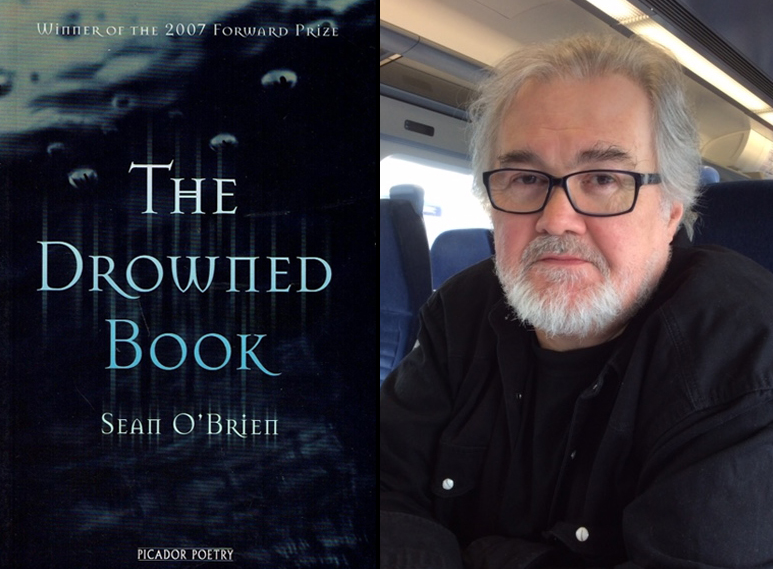
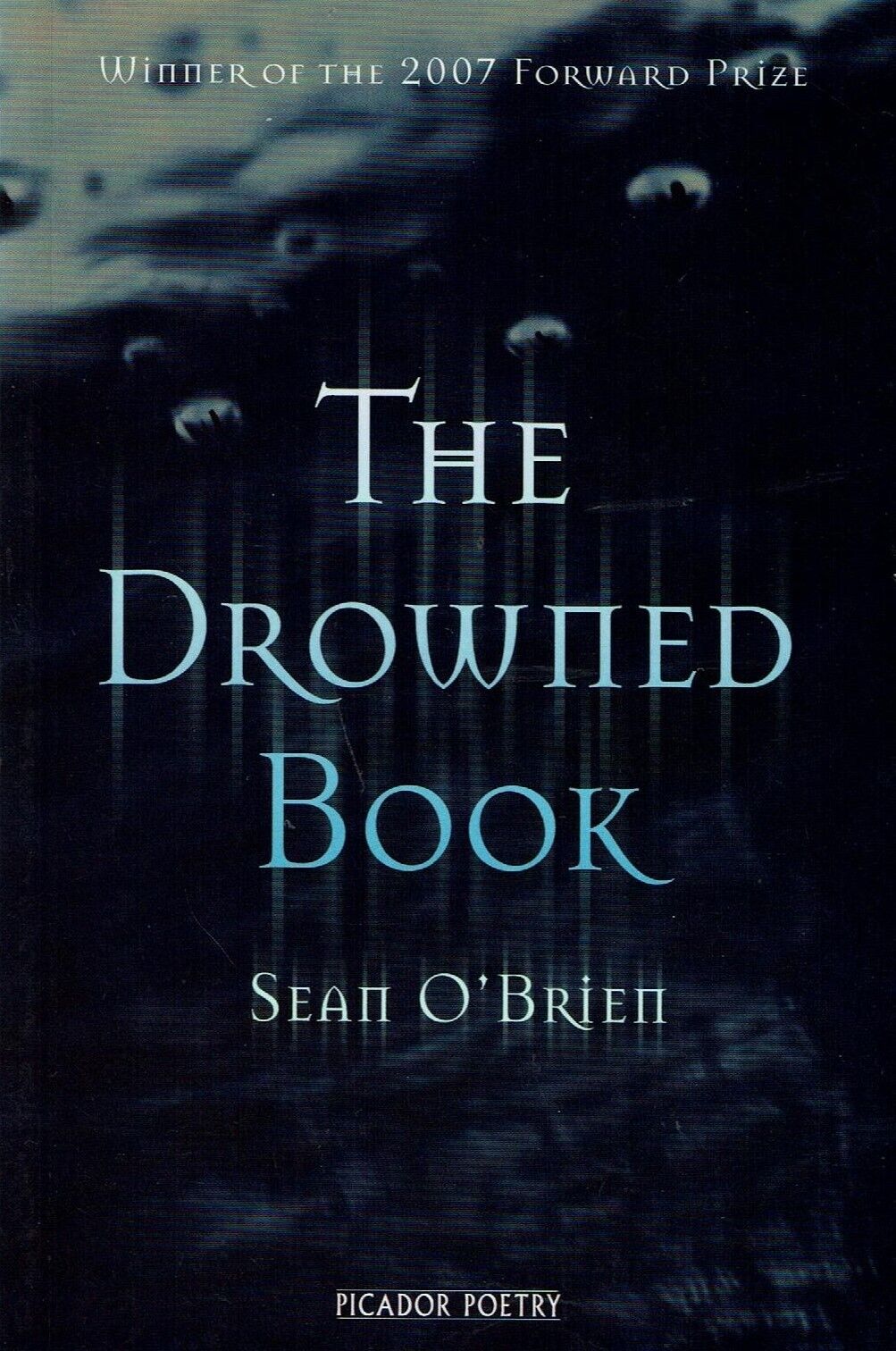
Sean O’Brien won the T. S. Eliot Prize 2007 with The Drowned Book (Picador Poetry), a collection described as ‘fierce, funny and deeply melancholy’ by Peter Porter, the Chair of judges in a panel that also included W. N. Herbert and Sujata Bhatt. He has been shortlisted on four other occasions: for Europa in 2018, The Beautiful Librarians in 2015, November in 2011 and Downriver in 2001. He was also a judge in 1997 and 2006.
We asked Sean to reflect on his win and his experiences of the Prize, which date back to the inaugural award presented to Ciaran Carson in 1993. He wrote:
It seems long ago, the first time I went to the T. S. Eliot prizegiving. This was in the days before there was a public reading the previous evening. The event took place at the Chelsea Arts Club in London and the late Ciaran Carson won. I remember spotting Stephen Spender, a great attender and conferencier, one of the last links with the gone world of Auden, MacNeice and the poetry of the 1930s. I ‘saw him plain’ but did not speak with him, for some reason, shyness perhaps.
Years later I was a judge when Seamus Heaney won. He’d been ill and couldn’t attend, and the prize was accepted on his behalf by his daughter Catherine. Next morning on Today on BBC Radio 4 John Humphrys asked why Heaney wasn’t more angry. Weren’t poets supposed to be angry? Seamus fielded this with his usual grace. When Humphrys turned to me I pointed out that courtesy had a significant place in Heaney’s work. ‘The end of art is peace’, as he put it in ‘The Harvest Bow’.
Heaney could also laugh at himself. A few years earlier, he broke off from conversation at the prizegiving so that he could be photographed. He sat down and assumed an expression of statesmanlike neutrality. Afterwards he explained: ‘If I smile and then win the prize, the photograph reads: “Heaney smug”. If I look serious and don’t win, it’s “Heaney glum”.’
The Eliot result is supposed to be embargoed until the award is made, though that’s quite a big word, so perhaps not everyone understands it. The year I received the prize it was not until after the event that my partner told me that earlier on at the hotel, while I was in the shower, there’d been a phone call from the literary editor of one of the newspapers congratulating me. Gerry kept this to herself, for which I’m very grateful.
Has the T. S. Eliot Prize changed? Obviously it’s become a public event, a marker in the calendar, rather than something largely of interest to poets and publishers. I think the founding principle was to draw attention to contemporary poetry. Large audiences attend the Readings at the Royal Festival Hall, and there is comment in the media on the merits of the shortlisted books. As to the award party, it’s not the Met Ball, but I did once enjoy listening to two female friends of mine discussing, several months in advance, what outfits they ought to wear for the occasion. This is some distance from the Velcro carpet in the struggling arts centre or the lecture room where the organiser of tonight’s reading is nowhere to be found.
Is this an improvement? In some respects, undoubtedly. But it may be worth reflecting that the T. S. Eliot Prize began before the internet and social media became the frame in which so much experience is viewed and judged and blathered about. As we all know, courtesy and proportion are not the obvious strong suits of a world driven by electronic addiction and prey to rancour, paranoia, tribalism and the rest. At times traces of this have been noticeable at the Royal Festival Hall readings, which is a shame and a distraction from the art of poetry itself, without which nobody would be there in the first place.
Sean O’Brien’s poetry has received numerous awards, including the Forward Prize (three times), the E.M. Forster Award and the Roehampton Poetry Prize. His Collected Poems (Picador Poetry) appeared in 2012 and his latest collection, Embark (Picador Poetry), was published in 2022. His pamphlet Impasse: for Jules Maigret was published by Hercules Editions in 2023. Sean O’Brien’s work has been published in several languages. His novel Once Again Assembled Here (Picador) was published in 2016. He is also a critic, editor, translator, playwright and broadcaster. Born in London, he grew up in Hull. He is Professor of Creative Writing at Newcastle University and a Fellow of the Royal Society of Literature.
About the T. S. Eliot Prize
The T. S. Eliot Prize celebrated its 30th anniversary in 2023. Awarded annually to the best new poetry collection published in the UK and Ireland, the Prize was founded by the Poetry Book Society in 1993 to celebrate the PBS’s 40th birthday and to honour its founding poet. The T. S. Eliot Estate has provided the prize money since the Prize’s inception in 1993, and the T. S. Eliot Foundation took over the running of the Prize following the acquisition of the PBS by InPress Books in 2016. For more on the history of the Prize, visit tseliot.com/prize