
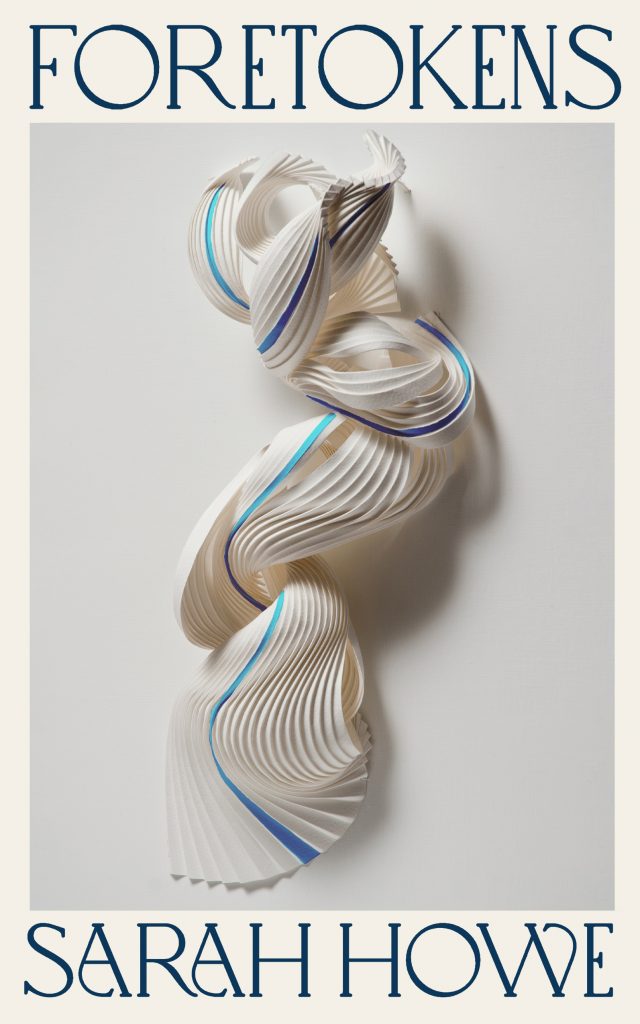
Foretokens

Chatto & Windus
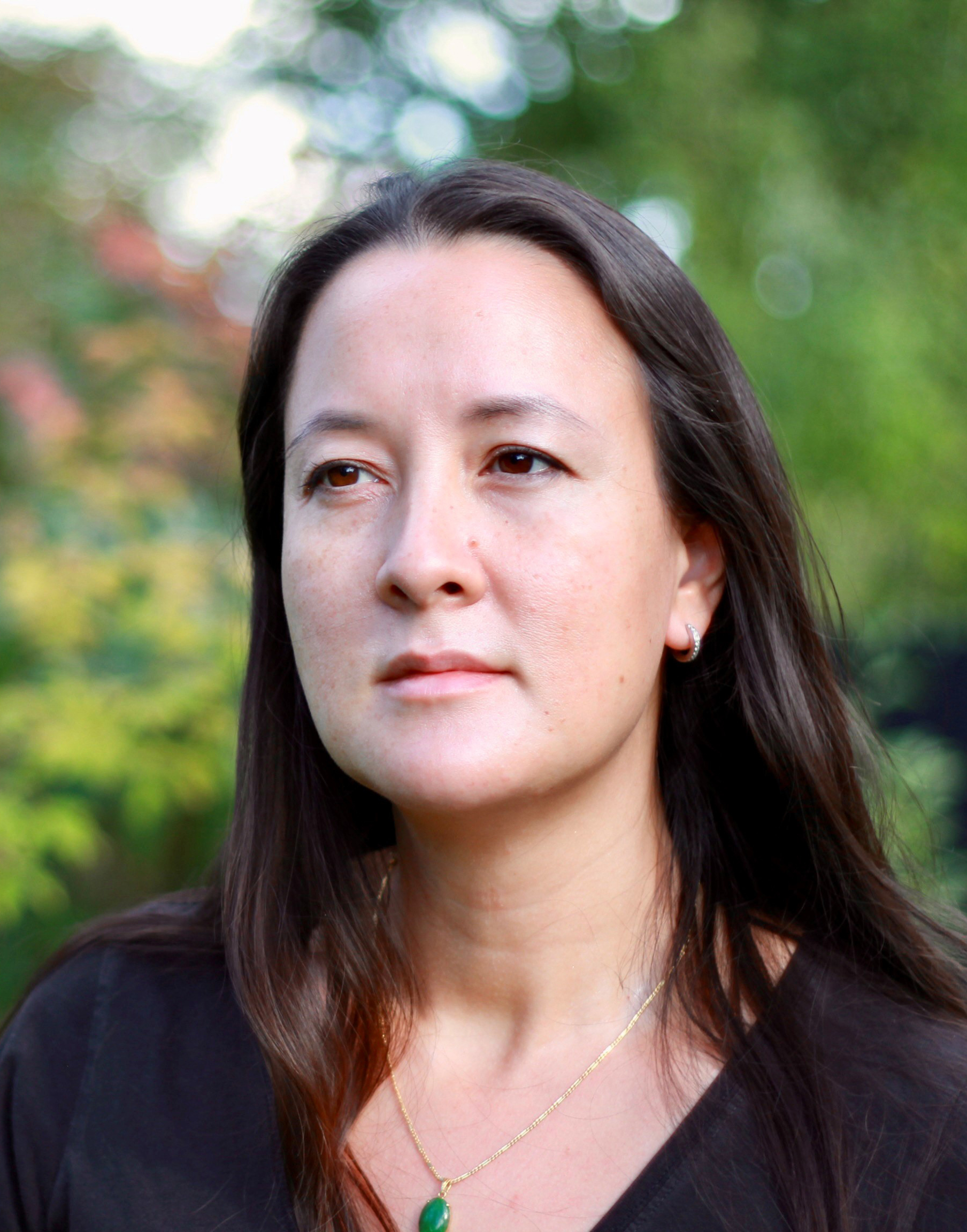
Howe, Sarah photo © Marc Lixenberg
Sarah Howe is a British poet, academic and editor. Born in Hong Kong to an English father and Chinese mother, she moved to England as a child. Her pamphlet, A Certain Chinese Encyclopedia, won an Eric Gregory Award, and her first collection, Loop of Jade (Chatto Poetry, 2015), won the T. S. Eliot Prize and the Sunday Times Young Writer...

Review

Review

In Sarah Howe's Foretokens, histories are sequences of code and we are codebreakers, hoping that the intelligence we gain will help us to better chart our future actions, writes John Field

Read the
Reader's Notes

Videos

Sarah Howe reads ‘Parallax’
Sarah Howe reads ‘Sometimes I think’
Sarah Howe reads ‘Eve’s Dream’
Sarah Howe talks about her work

Related News Stories

We’re delighted to announce the T. S. Eliot Prize 2025 Shortlist, which offers ‘something for everyone’ in collections of ‘great range, suggestiveness and power’. Judges Michael Hofmann (Chair), Patience Agbabi and Niall Campbell chose the Shortlist from 177 poetry collections submitted by 64 British and Irish publishers. The diverse list...
The T. S. Eliot Prize and The Poetry Society are delighted to announce the cohort for the fourth instalment of the Young Critics Scheme. Ten young writers have been selected and will each review, in video form, one of the poetry collections shortlisted for the T. S. Eliot Prize 2025....
The T. S. Eliot Foundation is delighted to announce the judges for the T. S. Eliot Prize 2025. Chair Michael Hofmann will be joined on the panel by Patience Agbabi and Niall Campbell.  Michael Hofmann said: I’m delighted to be asked to judge the T. S. Eliot Prize and look...
Review of Foretokens

In Sarah Howe’s Foretokens, histories are sequences of code and we are codebreakers, hoping that the intelligence we gain will help us to better chart our future actions, writes John Field

Sarah Howe’s second collection explores the past – geopolitical, personal, genetic – and its ability to write the future. Reading Foretokens dramatises this for the reader: words and phrases resurface, deepening like Larkin’s coastal shelf, and Howe’s poems evolve into a remarkable series of provoking interactions with one another.

As a former Research Fellow at Gonville and Caius, Cambridge, Howe will have sat in a dining room coloured by the light from the commemorative window celebrating the college’s Honorary Fellow, Francis Crick, and his role in revealing DNA’s double helix. Foretokens too is built from pairs and helixes. The forms Howe adopts are visually striking: couplets and a double mesostic (its parts can be read individually, or the eye can run across both columns) play with pairings, while, as indentations advance and recede, DNA’s helix is suggested on the page. Thematically, we feel the echoes of history as we join the dots between the transatlantic slave trade and sweated labour. Several poems entitled ‘Songs Spun of Us’ ebb and flow across the page, mirroring’s DNA’s helix, and open and close with ellipses. Typically, we might see this as a circular form, but here it suggests a snippet from a sprawling chain of DNA, the letters opening and closing each line are, Howe explains in the notes, taken from a Conserved Non-Coding Element, an artefact of DNA conserved by natural selection, and shared by almost all backboned creatures:

… A lphabet of us, cipher deciding the exact momen T

         G enes flip on. Pierced, an ovum’s moon divides in syn C

In a sequence that closes the collection, ‘An Error, A Ghost’, the speaker hears a story about the rediscovery of the court music of the Tang dynasty. In Japan, ‘Played back at double speed, the monks’ austere drone, spiralling in pitch, suddenly transformed into a lively melody the court musicians might play to accompany a night of dancing in the palace at Chang’an. When he compared that living fossil of a tune to the remaining fragments of Tang notation, they appeared to match.’ Foretokens acknowledges that more unites us than divides us.

The title of ‘Finely Potted White Glazed Porcelain Cup, Dehua Ware’ speaks the language of museums, of object as artefact, an improbable survivor and, in its own way, a Conserved Non-Coding Element. The cup, made ‘on a spinning wheel in Fujian’, addresses us and tells us that ‘Some twists / in my provenance are lost even to me’. The object, made for drinking rice wine, is stripped of purpose and context. Popes and kings ‘placed me in locked cabinets / with seahorses, sextants, unicorns’ tails’, an exotic curio until the final indignity of alteration by a silversmith: ‘I still remember the grip of those red-hot // scallops clamped around my rim’. And suddenly we’re in a visceral evocation of the degradations of the slave trade, of brandings and collars – another Conserved Non-Coding Element of human behaviour. ‘On a Line by Xu Lizhi’ responds to a Foxconn worker who took his own life after three years assembling smartphones for export to the West. There’s no silversmith inflicting indignities on a drinking bowl here. Xu Lizhi becomes the artefact, his ‘still-young face electroplates’, like a glossy logo on brushed aluminium.

Finally, Foretokens explores family. In ‘An Error, A Ghost’ the family feels like the drinking bowl, its provenance lost. The speaker’s grandmother once gave her brother a red drum, the kind used ‘to frighten / away “spirits of ill-intent”: a phrase from a failed // poem by a much earlier me (I dug it up, but / found it’s better lost), trying to decipher the riddle of her.’ Like the bowl, the drum’s purpose is also lost as, in the hands of a child, it transforms into a toy – things we don’t understand being generally repurposed for our amusement – an expression of our ignorance. Our histories become sequences of code, and not just in Crick’s sense, but in Turing’s too. We become codebreakers. We’re at war, and hoping that the intelligence we gain will help us to better chart our future actions.

Wandering through a museum, we find objects from one room speaking to those from another. On subsequent visits objects hitherto overlooked announce themselves and alter our reading. Foretokens is itself a gallery of beautiful objects and deserves to be treasured.

Sarah Howe’s Foretokens (Chatto & Windus) is shortlisted for the T. S. Eliot Prize 2025. John Field blogs at Poor Rude Lines.

Foretokens
Chatto & Windus

Newsletter

Be among the first to receive updates on the latest T. S. Eliot Prize news by subscribing now!


The T. S. Eliot Prize on Social Media

Part of tseliot.com

Designed by thinking

Interview of Foretokens

Foretokens
Chatto & Windus

Newsletter

Be among the first to receive updates on the latest T. S. Eliot Prize news by subscribing now!


The T. S. Eliot Prize on Social Media

Part of tseliot.com

Designed by thinking