
In Signs, Music Raymond Antrobus balances anxiety and optimism in a searching exploration of fatherhood, writes John Field.
Be among the first to receive updates on the latest T. S. Eliot Prize news by subscribing now!
In Signs, Music Raymond Antrobus balances anxiety and optimism in a searching exploration of fatherhood, writes John Field
Raymond Antrobus’s All the Names Given was shortlisted for the T. S. Eliot Prize in 2021. Fathers were on his mind then as, in the first poem, the dream vision, ‘The Acceptance’, we glimpse the speaker’s father who ‘laughs and takes // my hand, squeezes, his ring / digs into my flesh’. His seeming tangibility amplifies the pain of his absence. In Signs, Music the speaker considers the past’s influence on his impending fatherhood. Spending time with this collection is warm, intimate and, at times, a laugh-out-loud funny experience.
Antrobus’s epigraphs balance anxiety and optimism. The quotation from Katherine Angel’s Daddy Issues is first: ‘It’s hard to reckon with where you come from’. But the second, from Lucille Clifton’s ‘blessing the boats’, reads like a wish or a prayer: ‘and may you in your innocence / sail through this to that’. Then, over the page, Antrobus drops us into a moment from the past so vivid it’s in the present tense. It’s untitled too, which adds to the effect that this is unfiltered experience. We’re in the garden, on a rope swing, on the branch that ‘held us all summer, / my parents months from their second separation, / my sister a year from running away from home’, the speaker ‘just rustling in the wind’ buffeted by external forces, and perhaps seeing himself as little more than the rustling static from his hearing aids – a tiny noise in a big world. The present tense reveals the child inside the man. It’s Wordsworthian, and this reads like a moment from The Prelude.
Much of the collection feels like pages from a journal – with poems firing like anxious, imagistic bursts. The first section, ‘Towards Naming’, explores a new dad’s hopes and fears. The world is seen through new eyes and the invisible is suddenly visible:
Outside a café in New York
I heard a toddler shout
I’m awesome!
In London, a baby in a pram is
facing away from the mother
sat sipping her coffee glaring
down at her phone.
I lock eyes with the baby.
The baby’s eyes shriek
What!
Will you be any better?
Perhaps the mother has faced the whole pram away from herself as a demonstration of her power to shape the world as she desires – or perhaps the pram is parked at the table in the correct motherly way and it is the baby rebuffing its mother, and inclining itself towards the speaker. There’s an intensity to the close here – surely the obvious spot in a poem for a mother and baby to share a moment – but she’s otherwise engaged.
In the second section, ‘The New Father’, the scene is reprised. It doesn’t start well as ‘I pass the bins stuffed with Star- / bucks and Burger King cups’ (look at that first line, also stuffed to the brim and beyond, overflowing into line two). There’s nothing bucolic about this scene, with ‘the fountain / the smell of chlorine’ but, unpromising as it is, ‘I turn my son / in his pram to face the scene’: father and son sharing a moment, sharing the world. It’s transformative and healing: ‘the sight has opened // my ears.’
The cycles that spring to mind when we think of families are rarely positive: cycles of addiction, cycles of abuse. But Antrobus offers something more positive. In the first section, the poet sings ‘Three Little Birds’ to his unborn son, just as his father sang it to him. Marley’s words of consolation and reassurance ring through us and, in the final poem, we’re back with music, fears about channels of communication between a deaf father and a hearing son set aside: ‘The first word my son signed / was music’. Faced with the challenges of being a new dad, some will be tempted to reach for a self-help book, but Signs, Music would be of better service. As Antrobus’s father advised him, singing Bob Marley’s ‘Three Little Birds’: ‘Don’t worry about a thing / ‘Cause every little thing gonna be alright.’
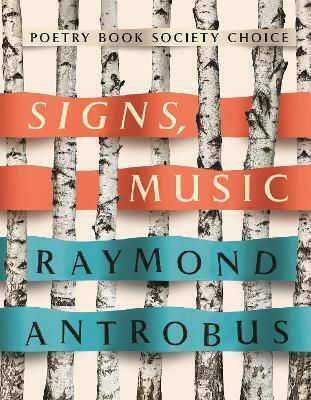
Raymond Antrobus’s Signs, Music (Picador Poetry, 2024) is shortlisted for the T. S. Eliot Prize 2024. John Field blogs at Poor Rude Lines.
Be among the first to receive updates on the latest T. S. Eliot Prize news by subscribing now!