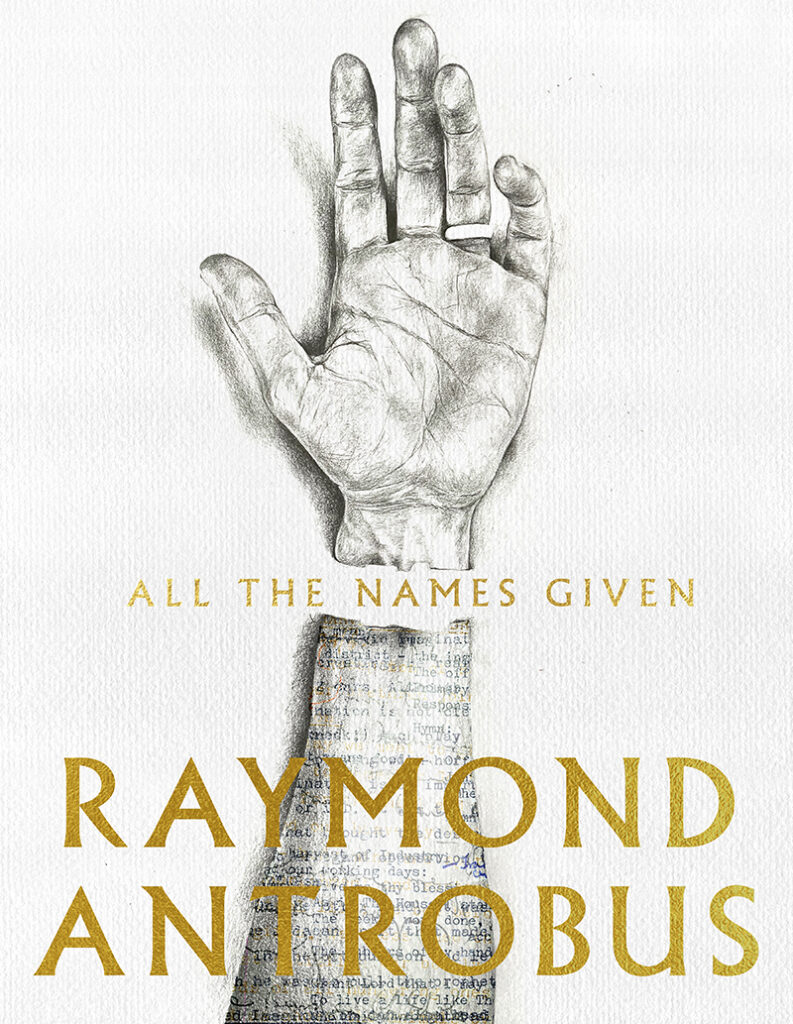
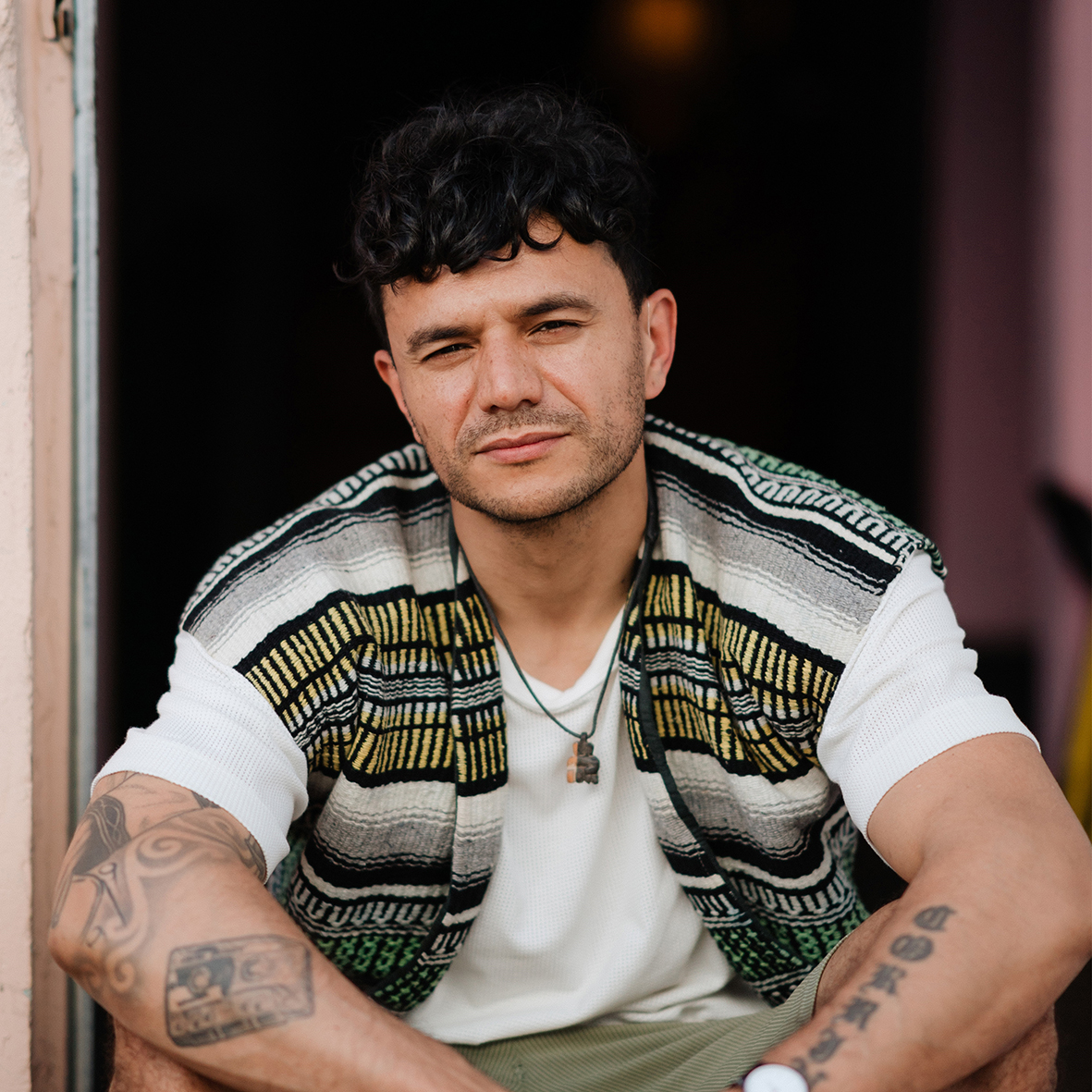
Raymond Antrobus's All the Names Given explores both the gaps between sound and silence, and the uneasy relationship between those who have been silenced and those who have silenced them, writes John Field
Be among the first to receive updates on the latest T. S. Eliot Prize news by subscribing now!
Raymond Antrobus’s All the Names Given explores both the gaps between sound and silence, and the uneasy relationship between those who have been silenced and those who have silenced them, writes John Field
In 2019, Antrobus’s collection, The Perseverance, received both the Ted Hughes Award and the inaugural Rathbones Folio Prize. His latest collection, All the Names Given, explores both the gaps between sound and silence, and the uneasy relationship between those who have been silenced and those who have silenced them.
Reading this collection is like having enabled the closed captions option on a television show: we’re not just provided with the text of the dialogue, but with descriptions of non-verbal sounds like [Emotional music] too. Antrobus’s closed captions play with this form, taking it to a metaphysical, spiritual level, as well as becoming a powerful commentary on imbalances of power. The collection opens with ‘Closer Captions’, where we hear the ‘[sound of mouth and arms opening]’. We read the body language and, in the silence, we feel the warmth of a greeting.
The epigraph, taken from Juan Ramón Jiménez, states that ‘The body as it daydreams goes / towards the earth that belongs to it’. Antrobus’s poems stage this bridge building and reclamation. The first poem, ‘The Acceptance’, may as well be a Medieval Dream Vision as the speaker converses with his dead father. The dream is palpable and ordinary as, in the speaker’s hotel room, the father ‘laughs and takes // my hand, squeezes, his ring / digs into my flesh’. The use of the present tense restages the vivid immediacy of the dream. We move beyond the everyday and into ‘the tall grass / by the riverbank’. The tall grass is like a beaded door curtain – we know that we are snatching a glimpse through the veil and, in this case, into a Yoruba religious experience as the goddess ‘Oshun, in brass bracelets and earrings, bathes my father in a white dress’. ‘Pearl’, the fourteenth century expression of love and loss, starts in much the same way as the speaker encounters ‘A gracious lady gowned in white’ (trans. Marie Borroff). Antrobus’s poem spans time, bridges cultures and, with its own shining hands, bids the reader welcome too.
In ‘The Royal Opera House (with stage captions)’, we encounter another cultural manifestation of closed captioning – the surtitles screened above the stage, used to translate arias sung in Italian or German into the lingua franca. Again, we’re in the present tense, our bums on the auditorium’s upholstered seats of privilege as we watch ‘A play. An all black cast in a South African Township.’ It sounds worthy enough but Antrobus’ surtitles perform the silences, the ‘[sound of speechless poverty]’ and, gradually, we zoom out and realise that ’We don’t see ‘the oil or the Coca-Cola Company’, or the hand holding the pen: ‘The writer, educated at Rhodes and Oxford University, has somehow freed himself from his own history’. As the audience rise to their feet to greet the production with a standing ovation, ‘none of the silences, none of them are filled’.
The collection stages the shadow between the emotion and the response and, miraculously, Antrobus’s poetry somehow holds this bubble of unfillable silence. In ‘At Every Edge’ we’re in a prison’s creative writing workshop. Again, we feel the human need for love and reconciliation: ‘One inmate squeezed my hand like a letter / he’d been hoping for’. He has murdered his wife and the poem ends ‘I wish / I knew her name so I could plant it here’. She’s hidden no longer in the shadows of the wings but she stands centre stage – mute.
Antrobus’s poems wrestle with the elemental forces of space and silence, yet from these borderlands he fashions something intimate and warm. Yes, All the Names Given, presents humanity at its worst: the police shooting of the deaf John T Williams, and the suicide of Tyrone Givens, whose hearing aids were removed before he started his sentence at Pentonville. However, this is a collection suffused with humanity and, working with the gaps between language, it is crafted with exquisite fragility.
Raymond Antrobus’s All the Names Given (Picador Poetry) is shortlisted for the T. S. Eliot Prize 2021. John Field blogs at Poor Rude Lines.
Be among the first to receive updates on the latest T. S. Eliot Prize news by subscribing now!