WINNER
2017

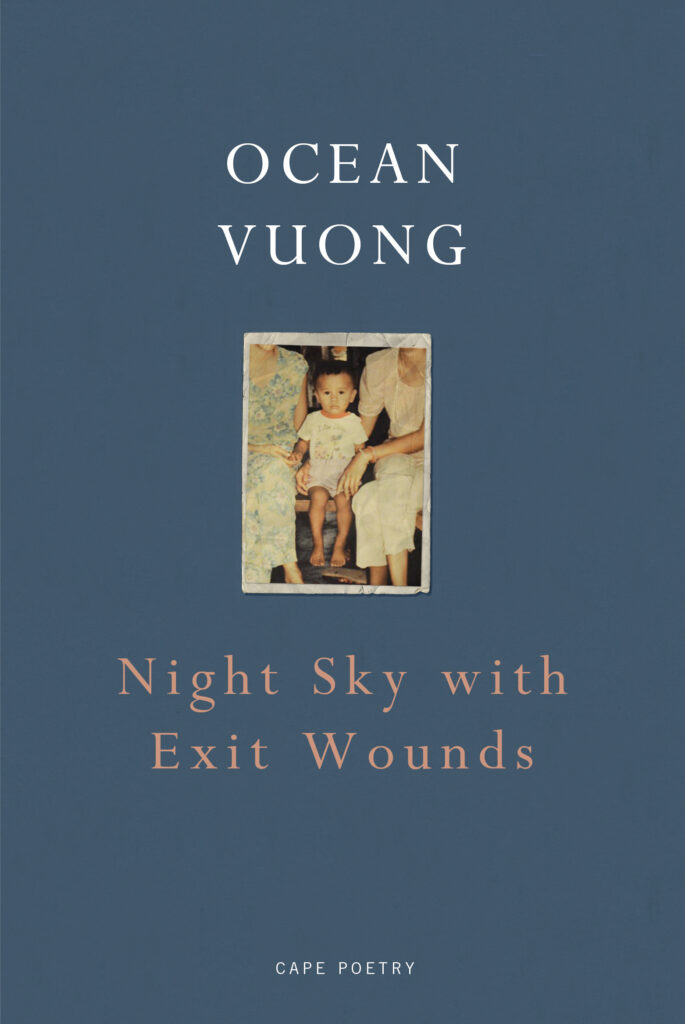
Night Sky with Exit Wounds

Cape Poetry
Ocean Vuong – Night Sky with Exit Wounds (Cape Poetry)  TS Eliot Prize Winner
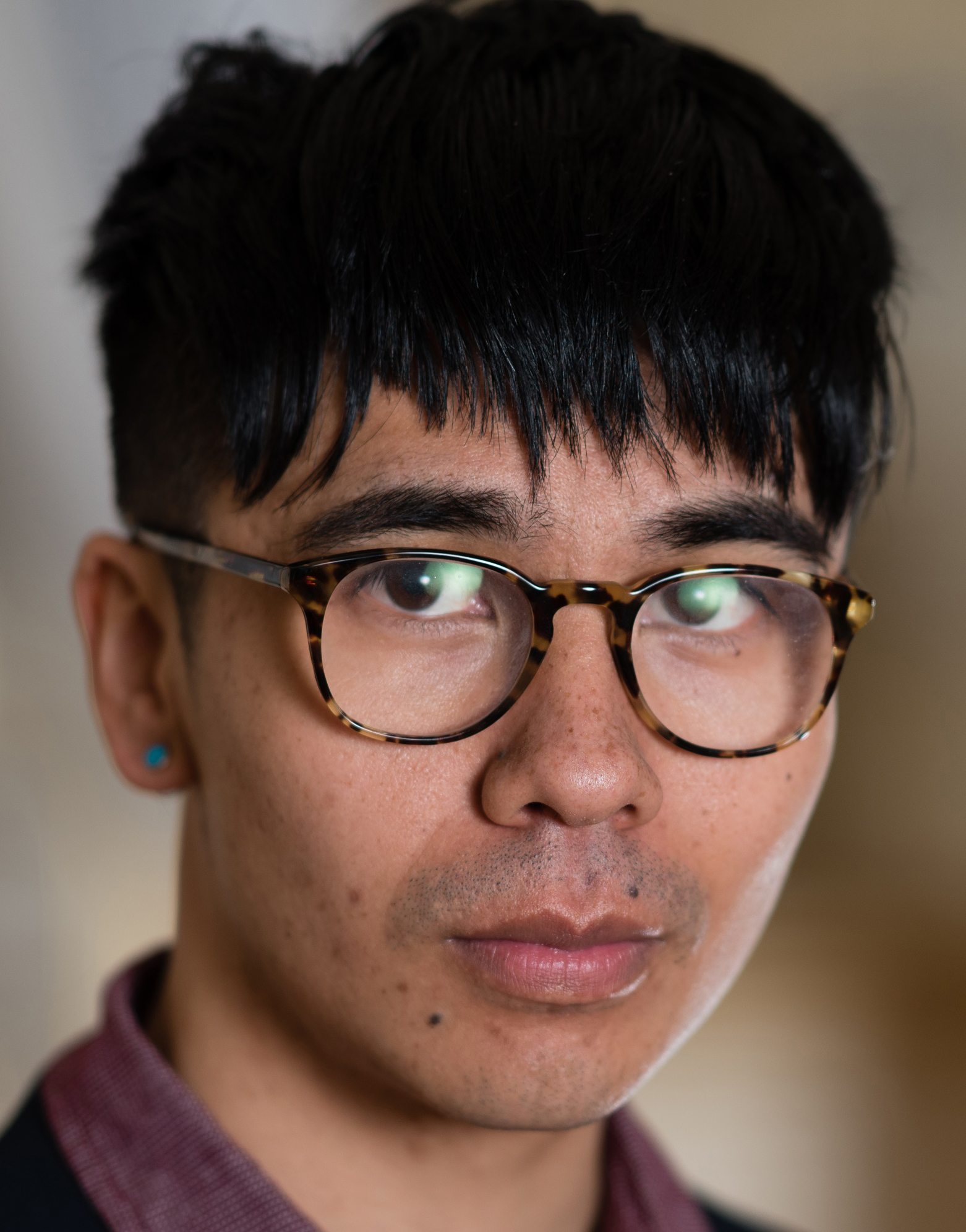
Born in Saigon, Vietnam, Ocean Vuong is the author of the best-selling debut, Night Sky with Exit Wounds (Cape Poetry), awarded the T. S. Eliot Prize 2017 and also the winner of the Whiting Award, the Thom Gunn Award, and the Forward Prize for Best First Collection. Since being awarded the Eliot Prize, Ocean Vuong has published the New York...

Review

Review

'Ocean Vuong's Night Sky with Exit Wounds meditates on violence. The Vietnam War’s legacy of trauma is considered through these searing, painful, playful, beautiful poems', writes John Field

Videos

Ocean Vuong reads from Night Sky with Exit Wounds at the T. S. Eliot Prize Shortlist Readings
Tracey Hammett reads from Ocean Vuong’s Night Sky With Exit Wounds
Ocean Vuong reads ‘A Little Closer’
Ocean Vuong reads ‘Telemachus’
Ocean Vuong talks about his work
Ocean Vuong reads ‘Queen Under the Hill’

Related News Stories

In 2023 the T. S. Eliot Prize celebrated its 30th anniversary. We marked the occasion by looking back at the collections which have won ‘the Prize poets most want to win’ (Sir Andrew Motion).  Ocean Vuong won the T. S. Eliot Prize 2017 with his debut collection Night Sky With Exit Wounds (Cape...
  The T. S. Eliot Foundation is delighted to announce that this year’s winner of the T. S. Eliot Prize 2017 is Ocean Vuong for his remarkable debut collection Night Sky with Exit Wounds, published by Cape Poetry. After months of reading and deliberation, Judges W. N. Herbert (Chair), James...
To mark the 25th anniversary of the T. S. Eliot Prize, the T. S. Eliot Foundation has increased the winner’s prize money to £25,000. Judges W. N. Herbert (Chair), James Lasdun and Helen Mort have chosen the Shortlist from a record 154 poetry collections submitted by publishers. Tara Bergin, The...
Review of Night Sky with Exit Wounds

Ocean Vuong’s Night Sky with Exit Wounds meditates on violence. The Vietnam War’s legacy of trauma is considered through these searing, painful, playful, beautiful poems, writes John Field

The first section of Ocean Vuong’s Night Sky with Exit Wounds opens with ‘Telemachus’ and ‘Like any good son, I pull my father out / of the water, drag him by his hair // through white sand, his knuckles carving a trail / the waves rush in to erase’. The poem’s couplets suggest a relationship between father and son but the poem references the Odyssey’s Odysseus and his son Telemachus, estranged for 20 years by the hiatus of the Trojan War and fraught, protracted homecoming. The father is passive, weakened. Despite the violence and power of his knuckles ‘carving a trail’, he is impotent as the ocean erases him.

In ‘Aubade with Burning City’, Vuong’s free verse explodes in floral beauty on the page like a fragmentation grenade. In the later ‘Notebook Fragments’, we read that ‘Some grenades explode with a vision of white flowers’ and so, in ‘Aubade’, Vuong’s ‘Milkflower petals’ gain a sinister meaning with re-reading. During the 1975 fall of Saigon, Armed Forces Radio played Irving Berlin’s ‘White Christmas’ as the code to initiate the final evacuation and Berlin’s bonhomie forms a sharp counterpoint for Vuong’s fear, panic and violence. Berlin’s Yuletide snow also shifts in meaning, ‘The song moving through the city like a widow’ in funereal white.

The legacy of violence is suggested as Vuong returns to the subject of fathers in ‘Always & Forever’: ‘Open this when you need me most, / he said, as he slid the shoe box, wrapped // in duct tape, beneath my bed.’ The effect of the stanza break momentarily leaves the reader with a gift-wrapped box before Vuong’s harsh, improvisatory ‘duct tape’ – a tape more easily associated with abduction and murder than with gift wrapping. The poem’s title references Luther Vandross’s song of the same name, and the notes and acknowledgements indicate that this song is Vuong’s father’s favourite, suggesting a loving, if difficult relationship. The box is surely America’s Pandora’s Box: it contains a firearm, a ‘Colt .45 – silent & heavy // as an amputated hand’. That a child can recognise the make and model of the pistol is dark testament to the right to bear arms and Vuong’s simile speaks of the violent uselessness of gun culture. However, with a metaphysical shift, the speaker wonders ‘if an entry wound in the night // would make a hole wide as morning’ and an imagined round punctures the fabric of the universe, revealing lighter possibilities behind the veil.

The cheek by jowl nature of light and dark is in evidence throughout. In ‘In Newport I Watch My Father Lay his Cheek to a Beached Dolphin’s Back’, the poem is torn asunder as half lines are alternately justified left and right, leaving a wound through the centre of the page. The father’s altruism is evident but, ‘The last time / I saw him run like that, he had / a hammer in his fist, mother / a nail-length out of reach’.

Towards the end of the collection, Homer’s Odyssey is revisited in ‘Odysseus Redux’. ‘He entered my room like a shepherd / stepping out of Caravaggio’. Like Caravaggio’s, Vuong’s chiaroscuro feels necessary. There is no glossing over the violence from which America was born yet, as ‘Into the Breach’ suggests: ‘Tenderness / a thing to be beaten / into’. Vuong’s poems consider war, terrorism, hate crimes and domestic abuse but his optimism and compassion provide the collection’s shaft of light.

Ocean Vuong’s Night Sky with Exit Wounds(Cape Poetry) is shortlisted for the T. S. Eliot Prize 2017. John Field blogs at Poor Rude Lines.
Night Sky with Exit Wounds
Cape Poetry

Newsletter

Be among the first to receive updates on the latest T. S. Eliot Prize news by subscribing now!


The T. S. Eliot Prize on Social Media

Part of tseliot.com

Designed by thinking

Interview of Night Sky with Exit Wounds

Night Sky with Exit Wounds
Cape Poetry

Newsletter

Be among the first to receive updates on the latest T. S. Eliot Prize news by subscribing now!


The T. S. Eliot Prize on Social Media

Part of tseliot.com

Designed by thinking