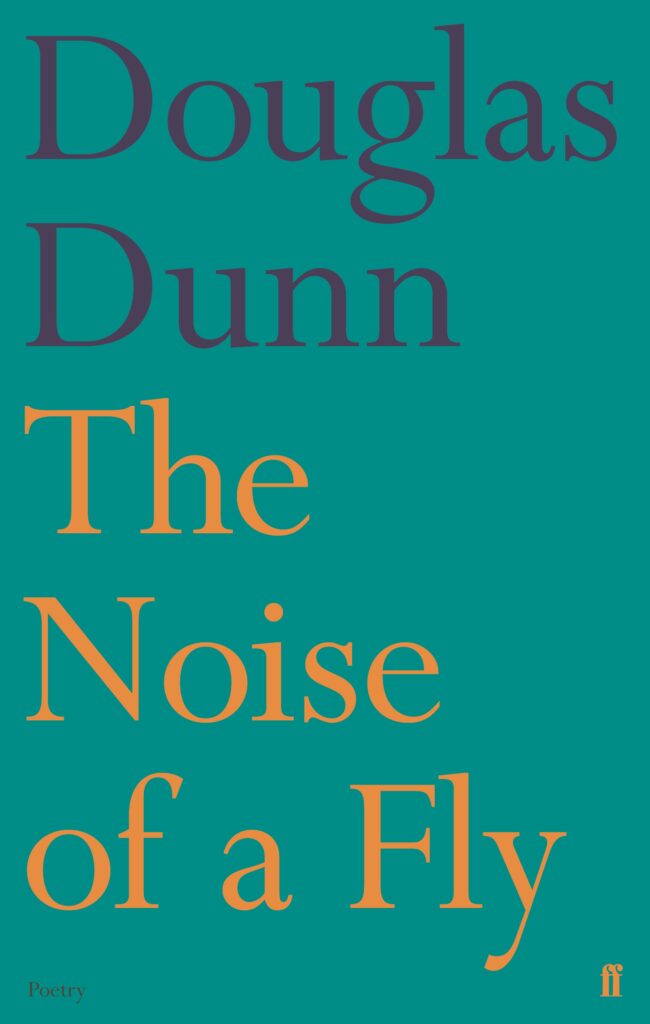
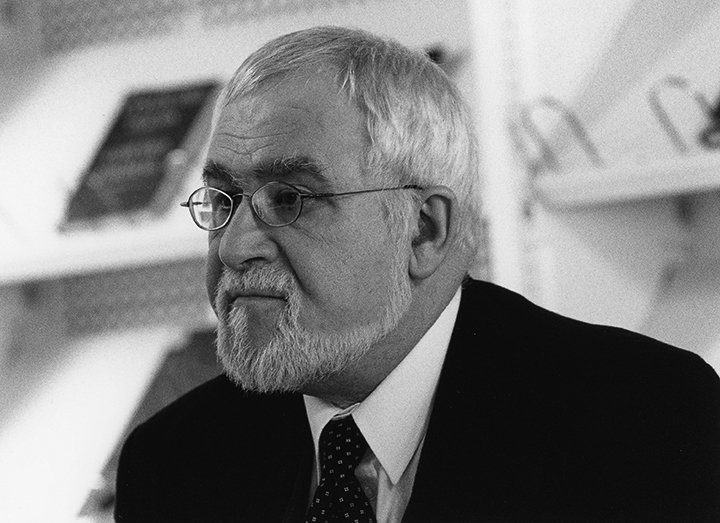
Douglas Dunn's The Noise of a Fly is a frank exploration of ageing, writes John Field, but the collection has a political and social edge, with Dunn's eye trained on Scottish independence and the state of the NHS
Be among the first to receive updates on the latest T. S. Eliot Prize news by subscribing now!
Douglas Dunn’s The Noise of a Fly is a frank exploration of ageing, writes John Field, but the collection has a political and social edge, with Dunn’s eye trained on Scottish independence and the state of the NHS
Douglas Dunn’s choice of epigraph directs the reader to John Donne’s Sermon LXXX, preached at the funeral of Sir William Cokayne on the 12 December, 1626. Donne writes, ‘I neglect God and his angels for the noise of a Flie’. Donne acknowledges our tendency to prevaricate, the fading of our faculties, and the imperfection of the world. We are also reminded of Donne’s flea of youthful fleshly desire, the passing of which is mourned in Dunn’s collection.
In ‘Senex on Market Street’, Dunn’s speaker is the senex (the stock figure of an old man in Latin literature) while ‘Posh totty totter past on serious heels’. ‘Totty’ suggests good-time girls but good times are fleeting, as the alliterative plosive clack of those heels morphs into ‘the fateful tick-tock of the clock’. Dunn’s Elegies, a response to the death of his first wife, opens with ‘Re-reading Katherine Mansfield’s Bliss and Other Stories’: ‘A pressed fly, like a skeleton of gauze, / Has waited here between page 98 / And 99’. Dunn’s fly, its shrivelled bloodlessness the antithesis of Donne’s sexual ‘The Flea’ and is ‘one dry tear punctuating ‘Bliss’’ but reminds us that love and grief possess their own immortality.
The chutzpah of Donne’s ‘The Flea’ is absent from The Noise of a Fly. In ‘The Nothing-But’” ‘Slowly the truth dawns, the nothing-butness of it, / The fly in the dram, the flea in your ear, / Just-cleaned window now smeared with dove-shit, / Confidence that turns into abject fear’. The fly is recast as the ultimate truth. Stock idiomatic phrases cushion with their obliquity but the second stanza hits us: ‘To have kissed the lips of one who was dying / Is to have tasted silence, salt, and wilderness, / And touched the truth, the desert where there is no lying’. Dunn’s desert silence, its arid emptiness, might be read as nihilistic – but yet there is a but in this nothing. The silence at the heart of the poem possesses a spirituality – a hesychasm – the silence and prayer of the Christian ascetics living in the Scetes desert.
Despite the mutability of the collection’s memorial poems and desks cleared for retirement, it makes an impassioned plea for the current generation to retain the best of recent social reform. In ‘Class Photograph’, the pace of change is acknowledged: ‘One foot in childhood, one in adolescence, / Rock Around the Clock made far more sense / Even than The Battle of the River Plate‘. The poem’s AAABBA rhyme scheme lends it a Burnsian quality (think ‘To a Mouse’) with the wearied social conscience that this implies. The regularity of the poem’s rhyme and its iambic backbone gives it a sense of certainty and order, adding to the power of its conclusion: ‘Destructive wars abroad… And yet, God bless / Democracy, dissent and the NHS’.
The penultimate poem, ‘English (a Scottish Essay)’ adopts a Popeian tone, handling the drama of politics with levity, all the speaker’s ‘bon mots / In somewhere else’s tongue! Why scourge and blame / History for what had to happen in it / When you can’t cancel it, not by a minute, / Not by a year, never mind an epoch?’
Dunn’s fly buzzes with health and shimmers in the light. These moving poems astonish with their beauty and bite with their truth.
Douglas Dunn’s The Noise of a Fly(Faber & Faber) is shortlisted for the T. S. Eliot Prize 2017. John Field blogs atPoor Rude Lines.
Be among the first to receive updates on the latest T. S. Eliot Prize news by subscribing now!